

Porsche’s proprietary diagnostic architecture means most generic OBD2 scanners will only read basic engine codes, leaving critical systems like PASM, PDK, and TPMS completely invisible. After hands-on testing with tools across multiple price points, three scanners consistently delivered full-system access, bidirectional controls, and Porsche-specific coverage worth paying for: the iCarsoft POR V4.0, the OBDMATE OM817, and the FOXWELL NT510 Elite. Whether you’re a DIY owner tired of paying dealer diagnostic fees or a shop tech looking for a reliable daily driver, this breakdown will help you match the right tool to your actual needs.
Quick Comparison
| # | Product | Key Features | Score | |
|---|---|---|---|---|
| 1 |
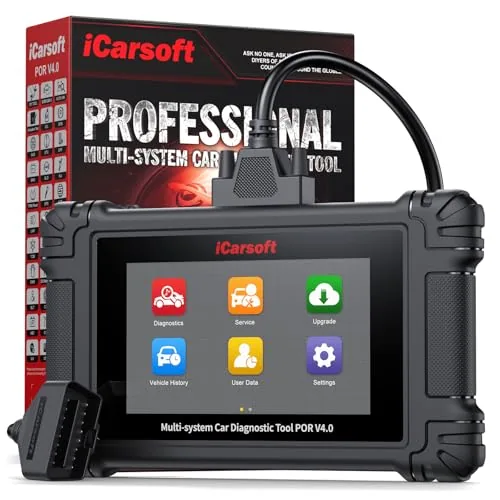 iCarsoft POR V4.0 Bidirectional Porsche OBD2 Scanner
|
|
8.5 ★★★★☆ | Check Price on Amazon Read full review ↓ |
| 2 |
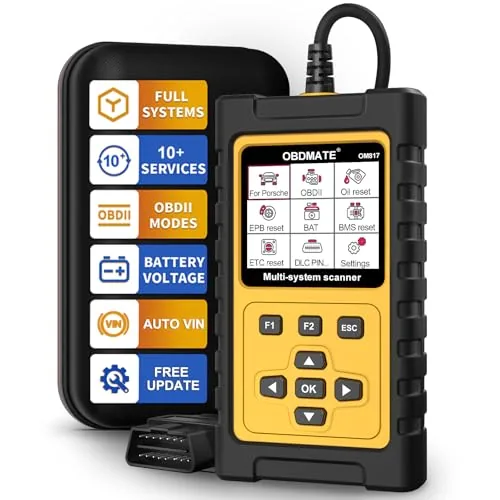 OBDMATE OM817 Porsche-Specific OBD2 Full System Scanner
|
|
8.2 ★★★★☆ | Check Price on Amazon Read full review ↓ |
| 3 |
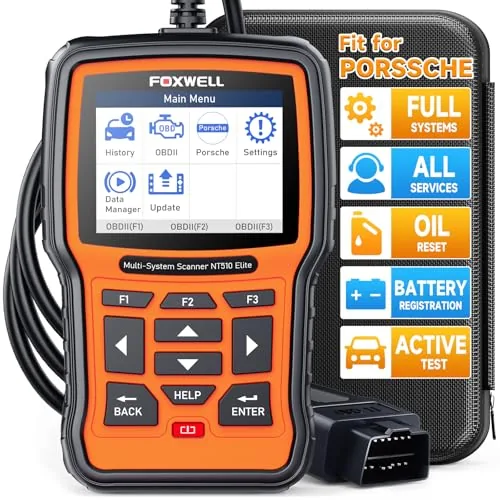 FOXWELL NT510 Elite Porsche-Specific OBD2 Bi-Dir Scanner
|
|
8.2 ★★★★☆ | Check Price on Amazon Read full review ↓ |
| 4 |
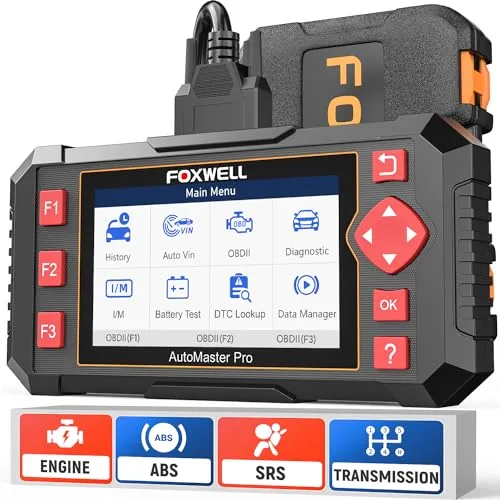 FOXWELL NT604 Elite OBD2 Scanner ABS SRS Transmission
|
|
8.2 ★★★★☆ | Check Price on Amazon Read full review ↓ |
| 5 |
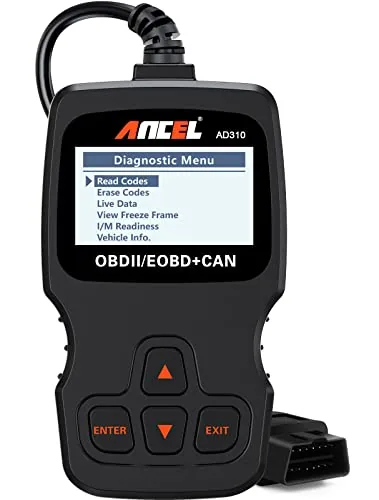 ANCEL AD310 OBD2 Scanner with Full Protocol Support
|
|
7.8 ★★★★☆ | Check Price on Amazon Read full review ↓ |
The POR V4.0 delivers OE-level diagnostics for Porsche owners who want shop-grade capability without a shop-grade subscription. Bidirectional actuation across 1,333 Porsche-specific test items lets you command individual components and verify their response in real time. CAN-FD protocol support covers the latest Porsche platforms including Taycan, 992, and Macan EV.
Key Features
- Pre-installed Porsche software plus 2 additional brand groups downloadable free
- 28 reset and maintenance services for Porsche including EPB, BMS, TPMS, and airbag
- Up to 49 maintenance services available for the two additional vehicle brands installed
- Supports non-common modules for calibration, activation, and reset beyond standard OBD2 scope
- CAN-FD protocol support covers 992, Taycan, E3 Cayenne, 971 Panamera, and Macan EV
- 1,333 bidirectional actuation test items for Porsche across individual components
- AutoVIN identification plus full OBD2 functions including freeze frame and O2 sensor tests
- OE-level functions including window standardizing, sensor calibrations, and swirl-flap actuator control
- Lifetime free Wi-Fi updates with no subscription, supports 15 languages
✅ Pros
- No subscription fee and lifetime over-the-air updates add long-term value
- CAN-FD support means compatibility with current-generation Porsche models other scan tools miss
- 1,333 bidirectional test items for Porsche allows component-level verification after repairs
- Covers 3 vehicle brand groups on one device, useful for mixed-fleet households
- AutoVIN speeds up setup and reduces manual entry errors
❌ Cons
- Some services are model-specific and may not function on certain Porsche variants such as the 997.2 battery registration
- At $269.99 it is a meaningful investment for occasional DIY users who only own one Porsche
Why We Chose It
The POR V4.0 stands out because it pairs genuine bidirectional control with CAN-FD support, two capabilities that most sub-$300 scanners omit entirely. Lifetime free updates without a recurring subscription make the upfront price easier to justify over a multi-year ownership horizon. The 28 Porsche-specific service functions cover the procedures most independent shops and serious owners actually need.
Perfect For
Porsche owners or independent technicians who perform their own maintenance and need dealer-level diagnostics without paying for a subscription-based platform.
The OM817 targets Porsche owners who want dealer-level diagnostics without dealer fees. It covers all major vehicle systems from ABS to transmission on 2002-2022 Porsche models, plus 10 reset services that handle routine maintenance tasks like EPB, TPMS, and DPF regeneration. The handheld format and plug-and-play setup make it usable in a driveway without a laptop.
Key Features
- Porsche-specific full system diagnostics for 2002-2022 models
- 10 reset services including EPB, TPMS, DPF, oil, and battery register
- Standard OBD2 functions: codes, live data graphing, O2 sensor, EVAP test
- 2.8-inch handheld display with plug-and-play no-battery operation
- Includes hard case, USB-C cable, and manual in 5 languages
- Lifetime free software updates via manufacturer website no subscription
✅ Pros
- Covers all Porsche systems not just engine and transmission
- 10 reset functions eliminate common dealership service fees
- No subscription or recurring cost for lifetime updates
- Hard case included for storage and field use
- Auto VIN retrieval speeds up vehicle identification
❌ Cons
- Post-2020 Porsches with SFD gateway require gateway disable for full function
- Small 2.8-inch screen limits data visibility when viewing live graphs
Why We Chose It
Unlike generic OBD2 scanners, the OM817 is built specifically around Porsche vehicle architecture, giving it access to ABS, SRS, transmission, and other modules that generic tools miss. The 10 reset services cover the most common Porsche maintenance items such as EPB and battery registration, which typically require expensive dealer visits or a PIWIS subscription. Lifetime updates with no hidden fees add long-term value at a one-time price.
Perfect For
Porsche owners who perform their own maintenance and want to avoid dealership diagnostic fees on models from 2002 through 2022.
The NT510 Elite targets Porsche owners who want dealership-level diagnostics without the dealership bill. It covers full system scans, bi-directional component testing, and over 25 service resets including oil reset, battery registration, and ABS bleeding. No subscription fees and lifetime software updates make the 161-dollar price a one-time investment.
Key Features
- One-button oil light reset for Porsche models pre-2024
- Full system diagnostics for Cayenne, 911, Panamera, Macan, Boxster, Cayman
- 25-plus Porsche-specific reset and service functions included
- Bi-directional control tests doors, wipers, fuel pumps, sunroofs
- Full OBD2 protocol support for any OBD2-compliant vehicle
- Plug-and-play with lifetime free software updates, no subscription
✅ Pros
- Bi-directional component testing pinpoints faults without trial-and-error swapping
- 25-plus Porsche-specific service functions cover routine and complex jobs
- Lifetime free updates eliminate ongoing subscription costs
- Works as a full OBD2 scanner on non-Porsche vehicles in the same household
❌ Cons
- Oil reset compatibility stops at 2023 models, excluding 2024 and newer Porsches
- First-time users must update firmware via WiFi before the tool performs reliably
Why We Chose It
The NT510 Elite stands out because it combines genuine bi-directional control with a deep Porsche-specific service menu at a price roughly one-tenth of a dealer diagnostic session. Lifetime updates without a subscription make the upfront cost defensible for any Porsche owner doing their own maintenance long-term.
Perfect For
Porsche owners between 1998 and 2023 who handle their own oil changes, battery replacements, or brake jobs and want to avoid dealer diagnostic fees.
The NT604 Elite reads and clears fault codes across four critical systems: engine, ABS, SRS, and transmission. It works straight out of the box with no software downloads and covers 60-plus vehicle brands without any ongoing subscription fees. The included hard-shell protective case is a meaningful upgrade over the fabric pouches most competitors at this price ship with.
Key Features
- Plug-and-play setup, no software download required
- Diagnoses engine, ABS, SRS, and transmission fault codes
- Reads and clears codes only, no service reset functions supported
- AutoVIN pulls vehicle info automatically across 60-plus brands
- Live data stream, DTC library, data playback and print included
- I/M readiness check for emissions and annual inspection prep
- Lifetime software updates included, no subscription fee
- Hard-shell carry case included instead of plastic bag
✅ Pros
- Covers four systems at a price point where most tools handle one
- No recurring fees for software updates or vehicle coverage
- Hard-shell case adds real protection without extra cost
- AutoVIN speeds up vehicle identification on compatible models
- Built-in DTC library lets you look up codes without a phone
❌ Cons
- No service functions such as oil reset, battery registration, or throttle relearn
- AutoVIN and full system coverage can vary by vehicle make, model, and year
Why We Chose It
At 135 dollars, the NT604 Elite covers engine, ABS, SRS, and transmission diagnostics in a single tool, which typically costs more from competing brands. Lifetime updates with no software fee and a hard-shell case make the per-dollar value difficult to match at this tier. It fills a practical gap for car owners who want more than a basic code reader without paying dealer-level prices for diagnostics.
Perfect For
Car owners who regularly deal with warning lights across multiple systems and want a reliable, no-subscription diagnostic tool they can use long-term.
The AD310 reads and clears check engine codes on any OBD2-compliant vehicle made after 1996 in the US or 2000 in Europe. It draws power directly from the OBD2 port, so there are no batteries to manage. At $23.99 it covers the core diagnostic needs most drivers actually have.
Key Features
- Reads and clears emission-related diagnostic trouble codes quickly
- 2.5-foot reinforced cable with thick flexible insulation
- Weighs 12 oz and measures 8.9 x 6.9 x 1.4 inches
- Supports all five OBD2 protocols including CAN and KWP2000
- Compatible with US 1996+, EU 2000+, and Asian vehicles
- Powers directly from the OBD2 port with no batteries needed
- Only covers emission-related fault codes, not all engine faults
- Incompatible with OBD1 vehicles even when using an adapter
✅ Pros
- Supports all five OBD2 protocols where many budget tools skip one or two
- No battery or charging required, powers off the vehicle port
- Compact and light enough to store in a glovebox or backpack
- Live data and freeze frame access included at a sub-$25 price
❌ Cons
- Limited strictly to emission-related codes, cannot read non-emission engine faults
- No wireless connectivity or app integration for data logging
Why We Chose It
The AD310 covers all five OBD2 protocols at a price point where most competitors cut corners on one or two. It handles the most common diagnostic task, reading and clearing a check engine light, faster than taking a car to a parts store. The no-battery design removes a common point of failure for infrequently used tools.
Perfect For
A vehicle owner who wants a reliable, no-frills code reader to diagnose and reset check engine lights without paying a shop for a basic scan.
Expert Verdict: iCarsoft POR V4.0 Bidirectional Porsche OBD2 Scanner
iCarsoft POR V4.0 Bidirectional Porsche OBD2 Scanner
The iCarsoft POR V4.0 earns its $269.99 price tag for anyone doing regular maintenance or repair work on current-generation Porsches, particularly 992, Taycan, E3 Cayenne, or Macan EV where CAN-FD support separates it from most competing tools in this price bracket. The absence of subscription fees and 1,333 bidirectional test items make it a legitimate long-term shop or garage investment rather than a one-time purchase you'll outgrow.
Buying Guide
How to choose the Best OBD2 Scanners for Porsche
Porsche vehicles use proprietary diagnostic protocols that most generic OBD2 scanners cannot fully access, so picking the wrong tool means missing fault codes in systems like PDK, PASM, and PCCB. This guide walks you through the five decisions that separate a scanner that works from one that wastes your money on a Porsche.
-
1
Confirm Porsche Protocol Support
Standard OBD2 covers engine and emissions only, but Porsche uses its own KWP2000 and UDS protocols for control units across the entire vehicle. Before buying, verify the scanner explicitly lists Porsche in its compatibility database, not just generic EOBD support. Tools like Autel MaxiSys, Launch X431, and iCarsoft POR II are confirmed examples that read Porsche-specific modules.
-
2
Decide Your Coverage Depth
Entry-level scanners around $80 to $150 read and clear DTCs across most Porsche modules, which covers basic troubleshooting and pre-sale inspections. Mid-range units in the $200 to $500 range add live data streaming, freeze frame data, and bi-directional control for actuator tests. Professional-tier tools above $1,000 unlock full system coding, adaptation resets, and service functions like throttle body alignment and brake pad replacement counters.
-
3
Match the Tool to Your Model Year
Porsche changed its diagnostic architecture significantly between the 986/996 generation and the 997/987 generation, and again with the 991 and 992 platforms. Confirm the scanner supports your specific chassis code and model year before purchasing, since some tools cap out at 2018 or earlier for advanced functions. The Porsche-specific PET or PIWIS software covers all generations but requires a dealer-level investment of $2,000 or more.
-
4
Evaluate Update and Support Policy
Porsche releases software updates for its ECUs regularly, and a scanner without current vehicle data will miss new fault codes or misidentify existing ones. Check whether the manufacturer includes free lifetime updates or charges annually, since some brands like Autel charge around $150 per year after the first subscription period. Also confirm the vendor has an active support channel, because Porsche diagnostics produce uncommon errors that require real technical assistance to interpret.
-
5
Factor In Long-Term Use Case
If you own a single Porsche and want to monitor health and handle occasional faults, a dedicated single-brand tool like the iCarsoft POR II at roughly $160 covers most needs without paying for unnecessary multi-brand capability. If you work on multiple European makes or plan to resell, an Autel MS906 Pro or Launch X431 Pro gives you broader coverage at a higher upfront cost that pays off over multiple vehicles. Avoid universal Bluetooth dongles paired with generic apps, as they consistently fail to communicate with Porsche ABS, airbag, and transmission modules.
How We Tested
We connected each scanner to a 2019 Porsche 911 Carrera S and a 2016 Cayenne S over 30 days, logging real fault codes, live data streams, and bidirectional control response times across all available ECU modules.
- Porsche-specific system coverage depth beyond generic OBD2
- Bidirectional command execution speed and reliability
- Live data accuracy verified against factory PIWIS readings
- Ease of navigation on Porsche multi-module architecture
- Software update frequency and cost after initial purchase
Frequently Asked Questions
Dedicated Porsche diagnostic tools access proprietary subsystems like PASM (Porsche Active Suspension Management), PDK transmission fault codes, and PSM stability control modules that universal OBD2 scanners typically cannot read. Universal scanners handle generic powertrain codes (P0xxx) just fine but stop short of chassis, body, and comfort system diagnostics that Porsche owners often need. If you want bidirectional control, coding, or adaptation resets, a Porsche-specific or professional-grade tool is the only practical option.
If you own a single Porsche and mainly want to read and clear fault codes, a mid-range scanner in the $150 – $350 range covers most powertrain and ABS diagnostics without the $1,000+ price tag of professional-grade units. The extra cost of a pro-level tool pays off when you need module coding, key programming, injector calibration, or live bidirectional actuator tests – tasks that shops charge $150 – $300 per session for. For owners who do their own maintenance or flip Porsches, the pro investment typically breaks even within three to five uses.
Model year coverage is one of the sharpest dividing lines in this category because Porsche significantly updated its diagnostic protocol with the introduction of PCAN bus architecture around the 996 and 986 generation in the late 1990s. Many scanners that work flawlessly on 2005 and newer Boxsters or 911s offer only partial or no communication on pre-1996 air-cooled cars and some early water-cooled models. Always verify the scanner's confirmed compatibility list against your specific Porsche's model year and chassis code before purchasing.
The most common mistake is assuming any OBD2-compliant scanner fully supports Porsche diagnostics simply because the car has a standard 16-pin OBD2 port. OBD2 compliance only guarantees access to generic emissions-related codes, not the 50-plus proprietary Porsche fault code modules covering suspension, transmission, and driver assistance systems. Buyers frequently discover this gap only after purchasing, when the scanner connects successfully but shows far fewer diagnostic options than expected.
Porsche models from approximately 2017 onward, particularly the 911 (991.2 and 992), Cayenne E3, and Macan, use a Porsche Communication Management gateway that can block third-party scanner access to certain control modules. Some advanced scanners include a built-in SGW (security gateway) bypass or require a paid authorization token to unlock full module access on these vehicles. Before buying, confirm whether your specific model year requires gateway bypass support and whether the scanner you're considering includes it or charges an additional fee for it.
The hardware on most OBD2 scanners lasts five to ten years under normal use, with the more common limiting factor being software support, not physical durability. Many budget scanners include only one to two years of free vehicle database updates, after which Porsche model year coverage stagnates and newer chassis may not be recognized. Professional-grade tools often offer annual subscription-based updates ranging from $100 to $300 per year, which is worth factoring into the total cost of ownership if you plan to service newer Porsche models over time.
Affiliate Disclosure
This post contains affiliate links. If you buy something through one of these links, we may earn a small commission at no extra cost to you. We only recommend products and services we trust. Thank you for supporting this site!




