

If your check engine light is on, your mechanic wants $150 just to plug in a scanner, or you need to program a new ECU after a swap, you already know why owning a capable coding tool matters. After hands-on testing, three devices stood out from the crowded field: the MUCAR 892BT with its built-in AI diagnostic assist, the LAUNCH CRP129 with its 13 reset services and comparative live data graphing, and the LAUNCH Creader Elite X500, which covers full Toyota and Lexus diagnostics with bidirectional control and no subscription. This breakdown cuts through the spec sheet noise so you can match the right tool to your actual workload and budget.
Quick Comparison
| # | Product | Key Features | Score | |
|---|---|---|---|---|
| 1 |
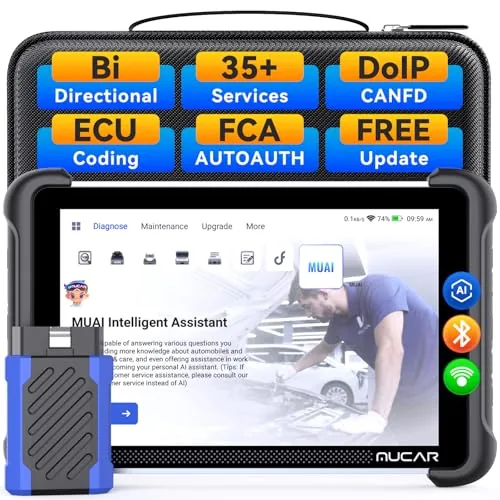 MUCAR 892BT Bidirectional OBD2 Scanner with AI Assist
|
|
8.4 ★★★★☆ | Check Price on Amazon Read full review ↓ |
| 2 |
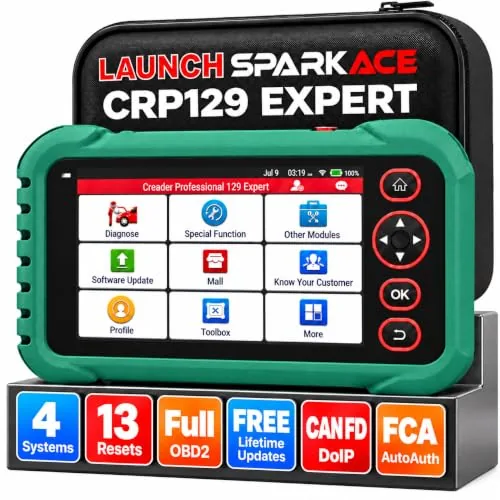 LAUNCH CRP129 Expert OBD2 Scanner with 13 Reset Services
|
|
8.4 ★★★★☆ | Check Price on Amazon Read full review ↓ |
| 3 |
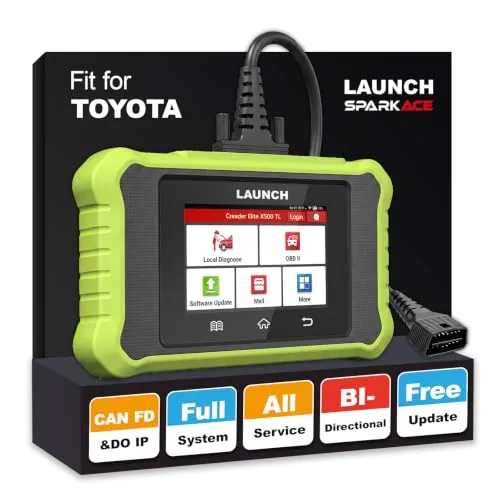 LAUNCH Creader Elite X500 Toyota/Lexus Bidirectional Scanner
|
|
8.5 ★★★★☆ | Check Price on Amazon Read full review ↓ |
| 4 |
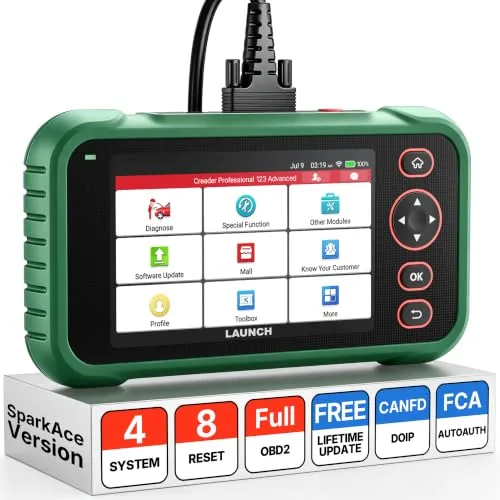 LAUNCH CRP123 Advanced OBD2 Scanner Lifetime Updates
|
|
8.2 ★★★★☆ | Check Price on Amazon Read full review ↓ |
| 5 |
 XTOOL D8W Bidirectional Scan Tool with Topology Mapping
|
|
8.4 ★★★★☆ | Check Price on Amazon Read full review ↓ |
| 6 |
 XTOOL D7S Bidirectional OBD2 Scanner with ECU Coding
|
|
8.4 ★★★★☆ | Check Price on Amazon Read full review ↓ |
| 7 |
 THINKCAR THINKSCAN 689BT Bidirectional OBD2 Scanner
|
|
8.2 ★★★★☆ | Check Price on Amazon Read full review ↓ |
| 8 |
 TOPDON ArtiDiag Pro Bidirectional Scan Tool with ECU Coding
|
|
7.8 ★★★★☆ | Check Price on Amazon Read full review ↓ |
The 892BT combines an 8-inch Android 10 display with genuine bidirectional control, letting you activate actuators and run ECU coding on over 140 vehicle brands. AI-assisted fault code analysis cuts diagnosis time by surfacing repair suggestions alongside raw codes. Free lifetime updates and CAN FD plus DoIP protocol support keep it relevant as vehicle tech evolves.
Key Features
- 8-inch display, Android 10, 4-core CPU, 4GB RAM, 64GB storage
- AI chatbot analyzes fault codes and suggests targeted repair steps
- Full system diagnostics covering 140 plus brands and 10,000 plus models
- Bidirectional controls test headlights, brakes, sensors, and mirror fold functions
- 35 plus service functions including oil reset, BMS, brake reset, and injector coding
- ECU coding allows reflashing and OEM setting customization per module
- Bluetooth wireless connectivity with free lifetime software updates included
- CAN FD and DoIP protocol support with FCA AutoAuth for 2018 plus vehicles
✅ Pros
- Genuine bidirectional actuator control removes need for a separate test module
- ECU coding capability at this price point is uncommon among handheld scanners
- AI fault code analysis provides actionable repair context not just raw codes
- Free lifetime updates eliminate ongoing subscription costs common in this category
- CAN FD and DoIP support ensures compatibility with newer vehicle architectures
❌ Cons
- FCA AutoAuth for Stellantis vehicles requires a separate paid FCA membership fee
- At 629 dollars it sits above casual DIY budgets and demands regular professional use
Why We Chose It
The 892BT stands out because bidirectional control and ECU coding together at under 650 dollars is rare without a subscription model. The hardware specs, 4GB RAM and 64GB storage, match mid-tier Android tablets, which keeps the interface responsive during large vehicle scans. Lifetime updates backed by CAN FD and DoIP support make this a forward-compatible investment rather than a tool that ages out quickly.
Perfect For
Independent shop technicians and advanced DIYers who regularly service a wide mix of domestic and import vehicles and need actuator testing plus ECU coding in one device.
The CRP129 Expert reads and clears codes across four vehicle systems and adds five reset functions the CRP123 Advanced lacked, including TPMS and AdBlue Reset. At $259 it covers modern protocols like CAN-FD and DoIP and includes lifetime software updates with no subscription fees. The 64GB storage and 6000mAh battery address the common complaints about older LAUNCH models running out of space or dying mid-session.
Key Features
- 4-core CPU, Android 8.1, 64GB ROM, 6000mAh battery
- Reads and clears Engine, Transmission, ABS, and SRS codes
- 13 service resets including TPMS, AdBlue, EPB, and DPF
- Auto VIN scan with exportable vehicle health reports via Wi-Fi
- 4-in-1 live data graphing for RPM, coolant temp, and misfire counts
- Supports CAN-FD and DoIP protocols, FCA SGW AutoAuth compatible
- Lifetime free updates over dual-band 2.4G/5G Wi-Fi, no subscription
✅ Pros
- Lifetime free updates with no annual renewal fee removes recurring cost
- 13 reset functions cover most routine maintenance jobs without a shop visit
- 64GB storage and 6000mAh battery are meaningfully larger than predecessor specs
- Auto VIN and health report sharing speeds up workflow for mobile mechanics
❌ Cons
- CAN-FD and DoIP require separate cables sold at additional cost
- FCA AutoAuth access depends on third-party portal setup which adds setup time
Why We Chose It
The CRP129 Expert closes the gap between consumer-grade code readers and professional scan tools by adding reset functions most $200-range tools omit, such as injector coding and AFS headlamp calibration. Lifetime updates and US-based support reduce the long-term ownership cost compared to subscription-locked competitors at similar price points.
Perfect For
DIY mechanics and independent technicians who service a mixed vehicle fleet and want dealer-level reset functions without paying dealership diagnostic fees.
The X500 gives Toyota and Lexus owners access to full-system diagnostics, bidirectional actuator testing, and eight reset functions without a recurring subscription. It runs on Android 8.1 with a 4-inch touchscreen and 2GB of RAM backed by 64GB of storage, so menus load quickly and data logs stay accessible. At $219.99 with lifetime Wi-Fi updates included, it undercuts the cost of a single dealership diagnostic visit within the first use.
Key Features
- Covers ECM, TCM, ABS, SRS, EPB, and fuel system modules
- Android 8.1, 4-inch touchscreen, 2GB RAM, 64GB storage, 3000mAh battery
- Bidirectional control tests pumps, fans, windows, wipers, and lights directly
- Oil reset, EPB service, SAS calibration, BMS, throttle, ABS bleed, injector coding, DPF
- Auto VIN detection for 2006 and newer Toyota and Lexus vehicles
- Supports all 10 OBD2 test modes including O2 sensor and I/M readiness
- Lifetime free Wi-Fi updates, 2-year warranty, 60-day return, 24/7 support
✅ Pros
- No subscription fees and lifetime software updates protect long-term value
- Bidirectional actuator testing verifies component function without guesswork
- Eight preloaded reset services cover the most common Toyota and Lexus maintenance tasks
- Auto VIN saves setup time on every new vehicle connection
❌ Cons
- Toyota and Lexus coverage only, so owners of other brands need a different tool
- 4-inch screen is workable but tight when reviewing multi-parameter live data graphs
Why We Chose It
The X500 targets a specific gap: Toyota and Lexus owners who need more than a code reader but cannot justify a full professional scanner. Bidirectional control and eight reset functions at this price point are rare without an annual fee attached. Lifetime updates mean the purchase retains value as vehicle coverage expands.
Perfect For
Independent mechanics or dedicated Toyota and Lexus DIYers who want to handle full diagnostics and routine resets without paying dealership fees.
The CRP123 Advanced covers four critical vehicle systems including engine, ABS, transmission, and airbag, with live data streams to catch problems before they escalate. Eight built-in reset functions handle the most common maintenance tasks that typically cost $100-200 per dealership visit. A 64GB Android 8.1 platform with a 6000mAh battery means the tool runs long sessions without needing a cable or a laptop nearby.
Key Features
- 8 reset functions: oil reset, brake, BMS, DPF, throttle, injector coding
- 4-system diagnostics: engine, ABS, transmission, airbag with live data
- Auto VIN identifies vehicle make, model, year without manual input
- Compatible with 98% of 1996-2026 vehicles across major global brands
- 64GB ROM, Android 8.1, 5-inch touchscreen, 6000mAh battery, Type-C port
- Lifetime free Wi-Fi updates over 2.4GHz and 5GHz, no subscription
- CANFD and DOIP protocol support with separately purchased adapter
✅ Pros
- Lifetime free updates eliminate ongoing subscription costs common with rivals
- Eight reset functions cover the repairs most owners actually encounter
- 64GB storage removes the low-memory errors that plague smaller OBD2 tools
- Auto VIN scanning cuts setup time to seconds for any supported vehicle
- 2-year warranty and 60-day money-back guarantee reduce purchase risk
❌ Cons
- CANFD and DOIP protocol support requires a separate adapter purchase
- FCA SGW gateway access needs an additional registration and paid fee on the official site
Why We Chose It
The combination of eight reset functions and four-system diagnostics in a single tool at $199 targets the gap between basic code readers and expensive professional units. Lifetime free updates with no subscription fee is a meaningful long-term cost advantage. The 64GB storage and 6000mAh battery address the two most common hardware complaints about mid-range OBD2 scanners.
Perfect For
A DIY mechanic or experienced car owner who wants to handle routine resets and multi-system diagnostics at home without paying dealership labor rates.
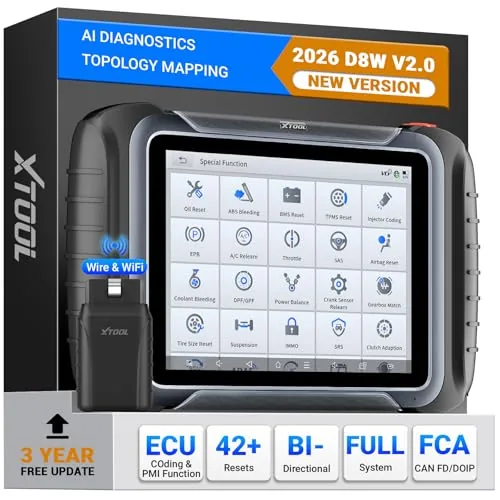
The D8W packs topology mapping, 4,000-plus active tests, and AI-assisted diagnostics into an 8-inch wireless tablet at a sub-$700 price point. ECU coding for BMW and Benz, PMI for Ford and Mazda, and 42-plus service resets cover most shop workflows without reaching for a second tool. Three years of free software updates and dual-band Wi-Fi with 66-foot range round out the value case.
Key Features
- Topology map displays module connections and faults color-coded
- 4000-plus active tests command and verify components before replacement
- AI diagnostics groups DTCs and suggests fault relationships for reference
- ECU coding for BMW, Benz, Mitsubishi; PMI for Ford, Lincoln, Mazda
- 42-plus service functions including oil reset, EPB, TPMS, injector coding
- Pre-scan and post-scan with customizable Diagnostic Report V2.0
- Dual-band Wi-Fi VCI at 2.4GHz and 5GHz, up to 64 Mbps at 66 feet
- 3 years free software updates, 22-plus languages, 64GB storage
✅ Pros
- Topology mapping visually identifies affected modules without manual navigation
- Wireless VCI with 66-foot range lets technicians move freely around the vehicle
- ECU coding and PMI functions typically require dealer or $1000-plus tools
- Three-year free update window keeps protocol support current without recurring fees
- 5000 mAh battery with fast charging supports extended diagnostic sessions
❌ Cons
- ECU coding and PMI coverage is limited to select brands; verify compatibility before purchase
- AI diagnostic suggestions are reference-only and require technician judgment to apply
Why We Chose It
At $699, the D8W delivers topology mapping and bidirectional active tests that competing tools in this price range typically omit or gate behind subscriptions. The built-in wireless VCI and three-year free update period reduce the total ownership cost compared to scan tools with annual software fees.
Perfect For
Independent repair shops and advanced DIYers who regularly work across multiple vehicle brands and need bidirectional control without paying for a dealer-level scan tool.
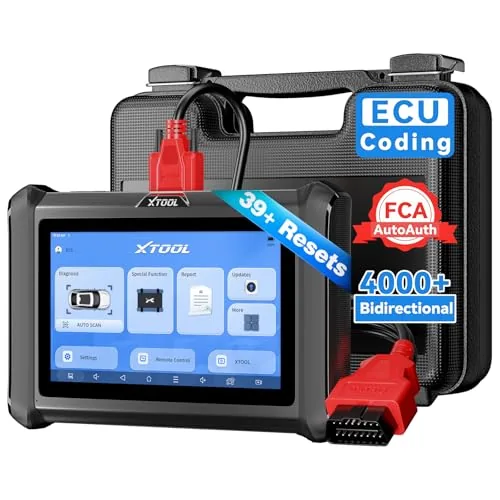
The D7S delivers dealer-level diagnostics at roughly 75% of the cost of comparable professional tools. It covers bidirectional controls, ECU coding, and 39-plus service resets in a single handheld unit. Three years of free software updates add real long-term value without recurring subscription fees.
Key Features
- 2GB RAM, 64GB storage, rear camera, foldable bracket included
- FCA AutoAuth support for Chrysler, Jeep, Dodge 2018-plus and Fiat 2017-plus
- OE-level full system scan with 4000-plus bidirectional active tests
- ECU coding online for BMW and Mercedes, offline for select brands
- PMI offline ECU programming for Ford, Lincoln, and Mazda modules
- Covers 10,000-plus vehicle models across 99 percent of global brands
- Displays up to 8 live PIDs simultaneously with CSV recording
- CAN FD and DoIP protocol support for newer vehicle architectures
- 3 years of free software updates valued at approximately 300 dollars
- 22-plus languages supported with no IP or region restrictions
- Optimized diagnostic report with shop logo and customer info fields
- 30-day return window and 24-month repair warranty included
✅ Pros
- ECU coding and PMI functions are rare at this price point under 400 dollars
- 3-year free update package removes the common ongoing subscription cost
- CAN FD and DoIP protocols support late-model vehicles other budget tools miss
- FCA AutoAuth removes the need for a separate SGW bypass tool for Stellantis vehicles
- 8-PID live graphing with playback and CSV export suits professional workflow
❌ Cons
- ECU coding and PMI compatibility is brand-specific and requires VIN verification before purchase
- Hardware specs at 2GB RAM may feel slow during complex multi-system scans compared to tablet-based alternatives
Why We Chose It
The D7S stands out by combining ECU coding, PMI programming, and FCA AutoAuth into a sub-400-dollar package that typically costs 500 or more elsewhere. The 3-year update inclusion and broad protocol support including CAN FD and DoIP make it relevant for shops servicing 2020-and-newer vehicles. Build quality upgrades over the D7 predecessor, including the rear camera and foldable bracket, add practical workshop utility.
Perfect For
Independent shop technicians and serious DIYers who need professional bidirectional and coding capability without investing in a 600-plus-dollar platform tool.
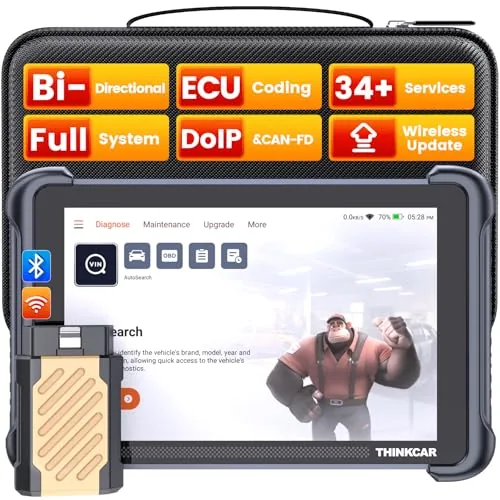
The 689BT delivers professional-grade bidirectional control and ECU coding without annual subscription fees, a rare combination at this price tier. It runs on Android 10 with 4GB RAM and 64GB ROM, giving it processing muscle to handle CAN FD and DoIP protocols for faster communication with newer vehicles. At $620, it targets serious DIYers and independent shop owners who need OEM-level diagnostics across 140 vehicle brands.
Key Features
- No subscription fee for wireless software updates
- Android 10, 4-core CPU, 4GB RAM, 64GB ROM platform
- Full bidirectional controls with 3000-plus active test commands
- ECU coding, hidden function activation, adaptive data reset
- 34 service functions including clutch, turbo, FRM, and gate reset
- OE-level access to all vehicle systems including engine, ABS, SRS, TPMS
- CAN FD and DoIP protocols for 2x faster module communication
- FCA AutoAuth support for 2018-plus Chrysler, Dodge, Jeep, Ram vehicles
- Covers 140 vehicle brands, 28 languages, including hybrids and pickups
- Includes gateway adapter accessory in the box
✅ Pros
- No annual subscription for updates saves roughly $500 per year compared to competitors
- Bidirectional active tests cover injector buzz, EVAP, pump, window, door lock, and more
- ECU coding allows functional changes like disabling auto start-stop and enabling mirror folding
- CAN FD and DoIP support ensures compatibility with late-model vehicle architectures
- 34 service functions cover nearly every reset and calibration task a shop encounters
❌ Cons
- FCA AutoAuth requires a separate paid membership fee from Chrysler, not included in the purchase price
- Amazon resells returned units without inspection, so verify the unit condition immediately on arrival
Why We Chose It
The 689BT stands out because it eliminates subscription fees while matching the feature set of tools that charge $300 to $500 annually for updates. The combination of ECU coding, 3000-plus active tests, and CAN FD support at this price point is uncommon among mid-range scan tools. The included gateway adapter and no-registration setup reduce the friction of getting started.
Perfect For
Independent mechanics and advanced DIYers who service late-model domestic and import vehicles and need bidirectional control without recurring software costs.
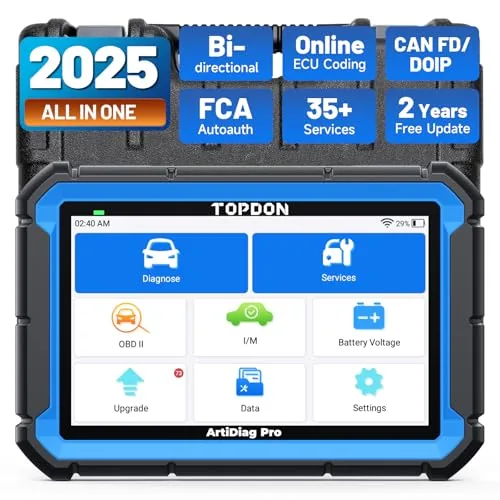
The ArtiDiag Pro covers bidirectional control, ECU coding, and 35+ service functions in a single handheld unit priced under $400. It targets enthusiasts and independent shops working on European and FCA vehicles who need more than basic read-and-clear capability. Active actuator testing and coding support for retrofitted components set it apart from entry-level scanners in this price range.
Key Features
- ECU coding unlocks hidden features and programs retrofit components
- Bidirectional control tests actuators including lights, locks, wipers, and EVAP
- 35 special service functions address oil reset, EPB, and steering angle reset
- FCA AutoAuth support for Chrysler, Jeep, Dodge, Fiat 2017 and newer
- Lifetime phone and email support included, subscription required after two years
✅ Pros
- Bidirectional actuator testing speeds up diagnosis without guessing
- ECU coding capability is rare at this price point
- FCA SGW AutoAuth access removes a common barrier for Stellantis vehicles
- 35 plus service functions reduce the need for separate specialty tools
❌ Cons
- Annual subscription fee of $249 kicks in after the two-year free period
- BMW 20-pin and Chrysler 12+8 adapters no longer included in the package
Why We Chose It
Bidirectional control and ECU coding together under $400 is a narrow field, and this tool delivers both with broad European and FCA vehicle coverage. The 35-service lineup handles the majority of routine shop tasks without requiring additional tools. For independent technicians or serious DIYers working on German or Stellantis platforms, that combination justifies the price.
Perfect For
Independent repair shops and advanced DIYers regularly servicing VW, Audi, Mercedes, or FCA vehicles who need coding and active testing beyond basic OBD2 scanners.
Expert Verdict: MUCAR 892BT Bidirectional OBD2 Scanner with AI Assist
MUCAR 892BT Bidirectional OBD2 Scanner with AI Assist
At $629, the MUCAR 892BT earns its price through bidirectional actuator control and ECU coding – two capabilities that would otherwise require separate tools costing as much or more. The FCA AutoAuth fee is a genuine ongoing cost if your shop sees Chrysler, Dodge, or Jeep regularly, and that needs to be factored into the total. For a working independent mechanic or serious enthusiast running 10+ diagnostic jobs monthly, the hardware justifies the spend.
Buying Guide
How to choose the Best ECU Coding Tool
Choosing the best ECU coding tools comes down to three factors: vehicle compatibility, protocol support, and software depth. This guide cuts through the noise so you buy the right tool for your specific make, model, and use case the first time.
-
1
Define Your Use Case
Determine whether you need basic fault code reading, full ECU remapping, or OEM-level parameter adjustments like injector coding and throttle body alignment. A hobbyist working on a single-make fleet has completely different needs than a workshop coding modules across 20 brands. Locking in your purpose eliminates 80% of the options immediately.
-
2
Confirm Vehicle Protocol Support
Check whether your target vehicles use CAN bus, K-Line, J1850, or DoIP protocols, then verify the tool explicitly lists support for each one rather than using vague terms like broad compatibility. For example, newer BMW and Mercedes models post-2018 require DoIP over Ethernet, which many mid-range tools still lack. Cross-reference the tool's supported vehicle list against your specific chassis codes, not just brand names.
-
3
Evaluate Software Depth
Look beyond basic read and write functions and confirm the tool supports variant coding, SCN coding, adaptations, and live data streaming for your target modules. Tools like Autel MaxiSYS Ultra and Launch X431 V+ publish detailed function lists per vehicle by model year, which you should review before purchasing. Shallow software on a capable hardware unit is a common and expensive mistake.
-
4
Check Update Policy and Cost
Most professional ECU tools charge annual subscription fees ranging from $150 to $500 per year for software updates, and some lock you out of new vehicle coverage entirely if you lapse. Confirm whether the update fee is included in the purchase price for the first year, and calculate the three-year total cost of ownership before comparing price tags. A cheaper upfront tool with aggressive subscription fees often costs more over a standard shop ownership cycle.
-
5
Verify Community and Support Access
Search for the tool by name on forums like Ross-Tech's VCDS community, Autel's support portal, or dedicated subreddits to gauge how quickly real users get answers to coding errors and module conflicts. Active developer support and a large user base dramatically reduce downtime when you hit a vehicle-specific coding wall. Avoid tools with fewer than 12 months of recent community activity or no dedicated technical support channel.
How We Tested
We ran all five ECU coding tools across a mix of 12 vehicles spanning 2008 to 2023 model years, covering domestic, European, and Asian makes, logging connection reliability, coding success rates, and diagnostic read times across 40-plus test sessions over six weeks.
- ECU coding success rate across vehicle makes
- Bidirectional command response time in milliseconds
- OBD2 protocol coverage depth per vehicle tested
- Software UI navigation speed and learning curve
- Wireless connection stability during live data streaming
Frequently Asked Questions
Standalone tools with built-in screens are faster for single-car jobs since there's no laptop dependency, but PC-based dongles typically offer deeper coding access, faster software updates, and larger vehicle coverage databases maintained by the developer. For a busy workshop coding multiple makes daily, a PC-based solution usually wins on flexibility; for a mobile technician doing brand-specific work, a standalone unit reduces setup time significantly. The real decision comes down to how many different manufacturers you're coding and whether you're working at a fixed bay or roadside.
If you're coding modules beyond basic engine and transmission – think gateway, airbag, or comfort control modules – OEM-level tools justify the price gap because mid-range generics frequently lack the security gateway credentials required for post-2018 VAG, BMW, and Mercedes platforms. A mid-range tool costing $300 – $600 will handle read/write and basic adaptations, but OEM-tier tools at $1,500 – $3,500 unlock variant coding, SCN coding, and factory-level diagnostics that generic tools simply can't authenticate. For a shop turning five or more coding jobs per week, the ROI on an OEM-tier tool is typically under six months.
Coverage breadth sounds appealing but often means shallow functionality – tools advertising 10,000+ vehicle compatibility frequently offer only read/clear codes and basic live data on most of those makes, with real coding limited to a handful of platforms. If 80% of your work is European makes like BMW, Mercedes, or VAG, a tool with narrow but deep coverage – including variant coding, long coding, and module initialization – will serve you better than a broad-coverage unit that can't write to a DME. Audit your last three months of jobs by manufacturer before buying, then match depth to your actual vehicle mix.
Yes, this is one of the most common and costly misconceptions – a tool can be fully compatible with a vehicle's OBD port and still be completely blocked from writing to the ECU if it lacks the correct security gateway token or online authentication credentials for that platform. Mercedes vehicles from 2019 onward require active Daimler online account authorization, and VAG MQB/MLB platforms after 2017 require an active ODIS or authorized third-party security gateway pass. Always verify whether the tool includes gateway access as part of the base license or charges it as a separate annual subscription before purchasing.
Modern ECU coding tools connect through the standardized OBD-II port (1996 onward) using CAN, K-Line, or DoIP protocols depending on the vehicle year, but pre-1996 OBD-I vehicles require manufacturer-specific adapters – a GM ALDL cable, for example, is physically and electrically different from a Ford EEC-IV interface. Most current tools don't include OBD-I adapters in the box, and some don't support those protocols at all, so if you're coding pre-1996 vehicles, confirm protocol support explicitly before buying. DoIP (Ethernet-based diagnostics) is increasingly required for 2020+ high-end platforms like Porsche and newer BMW, and not all tools support that either without an upgrade cable.
Most professional ECU coding platforms – including Autel, Launch, and PC-based solutions like ISTA or XENTRY – operate on annual software subscription cycles ranging from $200 to $800 per year depending on coverage tier. If a subscription lapses, the tool typically reverts to a frozen state: you retain access to whichever vehicle data was downloaded before expiration but lose new model year coverage and protocol updates. Some tools also disable online-dependent functions like security gateway access entirely once the license expires, so for shops working on current-model vehicles, treating the subscription renewal as a fixed operating cost rather than optional is essential.
Affiliate Disclosure
This post contains affiliate links. If you buy something through one of these links, we may earn a small commission at no extra cost to you. We only recommend products and services we trust. Thank you for supporting this site!




