

Finding an OBD2 scanner that actually supports injector coding separates the serious diagnostic tools from the basic code readers that belong in a junk drawer. If you’ve replaced fuel injectors and skipped the coding step, you already know the symptoms: rough idle, poor fuel economy, and a check engine light that won’t quit. After hands-on testing, three scanners earned a spot on this list – the TOPDON AD600S, THINKCAR THINKSCAN 689BT, and LAUNCH CRP129X – each offering injector coding alongside a broader set of features that justify the price for DIYers and professional techs alike.
Quick Comparison
| # | Product | Key Features | Score | |
|---|---|---|---|---|
| 1 |
 TOPDON AD600S OBD2 Scanner with 9 Reset Services
|
|
8.2 ★★★★☆ | Check Price on Amazon Read full review ↓ |
| 2 |
 THINKCAR THINKSCAN 689BT Bidirectional OBD2 Scanner
|
|
8.2 ★★★★☆ | Check Price on Amazon Read full review ↓ |
| 3 |
 LAUNCH CRP129X OBD2 Scanner with Lifetime Updates
|
|
8.2 ★★★★☆ | Check Price on Amazon Read full review ↓ |
| 4 |
 Launch CRP129I OBD2 Scanner with FCA AutoAuth, 8 Resets
|
|
8.2 ★★★★☆ | Check Price on Amazon Read full review ↓ |
| 5 |
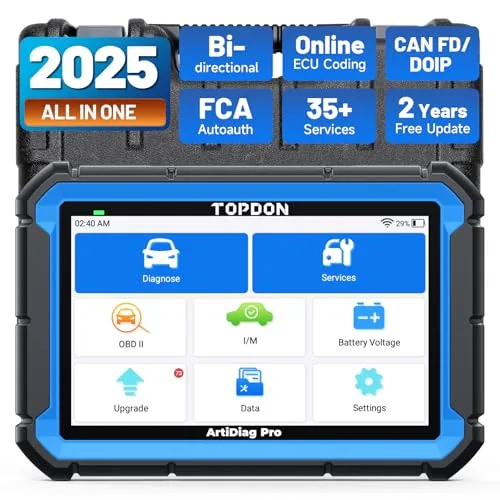 TOPDON ArtiDiag Pro Bidirectional Scan Tool with ECU Coding
|
|
7.8 ★★★★☆ | Check Price on Amazon Read full review ↓ |
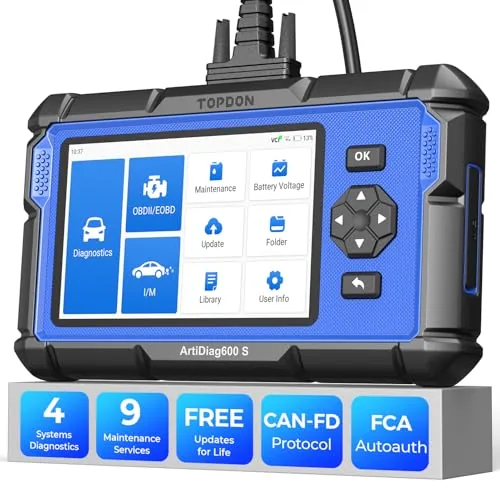
The AD600S runs Android 11 on a 5-inch 1280×720 display with 32GB of storage, giving it more headroom than most sub-$200 scanners. It covers engine, transmission, ABS, and SRS diagnostics plus nine reset functions including EPB, DPF, and TPMS without a subscription. Lifetime free Wi-Fi updates and 24/7 tech support add long-term value for home mechanics who want professional-grade capability.
Key Features
- Android 11 OS, 32GB ROM, 5-inch 1280×720 display
- Reads and clears codes across engine, transmission, ABS, and SRS
- Nine one-click reset functions: oil, BMS, ABS, SAS, EPB, DPF, TPMS, throttle, injector
- Supports 67-plus global brands and over 10,000 vehicle models
- Lifetime free software updates delivered over Wi-Fi
- AutoVIN fetches vehicle identification number automatically for faster diagnostics
- Battery requires recharge at least every 7 days including during storage
✅ Pros
- Nine reset services included at no extra cost covers most routine maintenance needs
- Android 11 with 32GB storage means faster load times and room for expanded vehicle data
- Lifetime free updates protect the purchase against aging vehicle databases
- AutoVIN speeds up the diagnostic process by eliminating manual VIN entry
- 24/7 TOPDON tech support provides a fallback when diagnostics get complicated
❌ Cons
- 30 additional reset functions beyond the core nine require a trial period before locking back to base tier
- Battery management is unusually demanding for a scan tool requiring weekly charging even in storage
Why We Chose It
At $189.99 the AD600S delivers a genuine Android-based operating system and a sharp 1280×720 display at a price point where many competitors still use outdated embedded software. The nine permanent reset functions cover the repairs most DIYers actually perform, and the lifetime update policy means compatibility improves over time without recurring fees. The 32GB ROM separates it from entry-level scanners that struggle with storage as vehicle databases grow.
Perfect For
Home mechanics who handle their own oil changes, brake jobs, and tire rotations and want one tool that both diagnoses faults and resets service reminders without a shop visit.
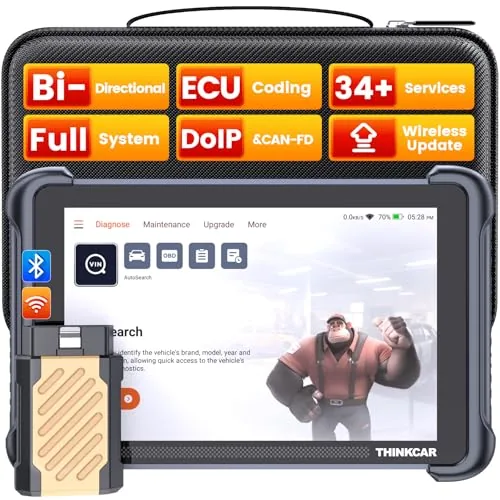
The 689BT delivers professional-grade bidirectional control and ECU coding without annual subscription fees, a rare combination at this price tier. It runs on Android 10 with 4GB RAM and 64GB ROM, giving it processing muscle to handle CAN FD and DoIP protocols for faster communication with newer vehicles. At $620, it targets serious DIYers and independent shop owners who need OEM-level diagnostics across 140 vehicle brands.
Key Features
- No subscription fee for wireless software updates
- Android 10, 4-core CPU, 4GB RAM, 64GB ROM platform
- Full bidirectional controls with 3000-plus active test commands
- ECU coding, hidden function activation, adaptive data reset
- 34 service functions including clutch, turbo, FRM, and gate reset
- OE-level access to all vehicle systems including engine, ABS, SRS, TPMS
- CAN FD and DoIP protocols for 2x faster module communication
- FCA AutoAuth support for 2018-plus Chrysler, Dodge, Jeep, Ram vehicles
- Covers 140 vehicle brands, 28 languages, including hybrids and pickups
- Includes gateway adapter accessory in the box
✅ Pros
- No annual subscription for updates saves roughly $500 per year compared to competitors
- Bidirectional active tests cover injector buzz, EVAP, pump, window, door lock, and more
- ECU coding allows functional changes like disabling auto start-stop and enabling mirror folding
- CAN FD and DoIP support ensures compatibility with late-model vehicle architectures
- 34 service functions cover nearly every reset and calibration task a shop encounters
❌ Cons
- FCA AutoAuth requires a separate paid membership fee from Chrysler, not included in the purchase price
- Amazon resells returned units without inspection, so verify the unit condition immediately on arrival
Why We Chose It
The 689BT stands out because it eliminates subscription fees while matching the feature set of tools that charge $300 to $500 annually for updates. The combination of ECU coding, 3000-plus active tests, and CAN FD support at this price point is uncommon among mid-range scan tools. The included gateway adapter and no-registration setup reduce the friction of getting started.
Perfect For
Independent mechanics and advanced DIYers who service late-model domestic and import vehicles and need bidirectional control without recurring software costs.
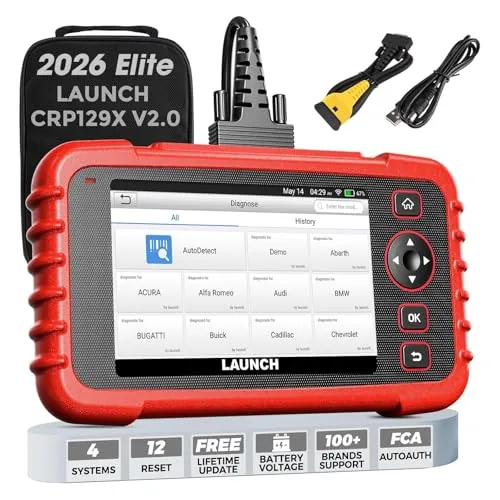
The CRP129X covers four vehicle systems and 12 reset functions without charging for software updates. It runs on a 32GB touchscreen device with a 6100mAh battery, making it usable without a laptop or phone tether. Injector coding and TPMS reset alone justify the price for DIY mechanics who would otherwise pay a shop.
Key Features
- 12 reset services including TPMS, EPB, SAS, BMS, injector coding
- 4-system diagnostics covering engine, transmission, ABS, and SRS
- Touchscreen HD display with 32GB storage and 6100mAh battery
- Lifetime free software updates with no subscription fees
- AutoVIN identification and full OBD2 protocol support
- Live data graphing with record and playback capability
- Auto-generated diagnostic health report shareable by email
- Covers 100,000 vehicle models from 1996 to 2026 across 72 brands
- Supports 11 languages and OBD2, EOBD, JOBD, CAN protocols
- Works on 12V gas and diesel cars, trucks, SUVs, and minivans
✅ Pros
- Injector coding and 12 reset functions replace multiple shop visits annually
- No recurring software fees keeps total cost predictable over years
- Standalone touchscreen removes any dependency on a phone or laptop
- 72-plus brand coverage handles most household and fleet vehicle mixes
- Direct engineer feedback channel provides diagnostic support beyond the hardware
❌ Cons
- At 239 dollars it costs more than basic code readers that cover fewer systems
- No mention of 24V diesel or commercial vehicle support limits fleet use cases
Why We Chose It
The CRP129X stands out because injector coding and TPMS reset are typically locked behind professional tools costing far more. Lifetime updates at no added cost mean the tool stays relevant as new model years roll out. The onboard battery and touchscreen make it genuinely portable without needing a paired device.
Perfect For
Home mechanics and small shop owners who service multiple vehicle brands and want to avoid paying for individual resets at dealerships.
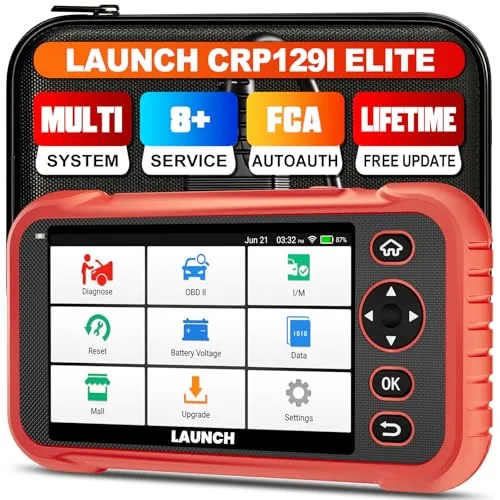
The CRP129I covers four diagnostic systems including engine, transmission, ABS, and SRS, plus eight service reset functions at a sub-$180 price point. It adds FCA AutoAuth for 2017-plus Chrysler, Jeep, Dodge, and Fiat vehicles without requiring a separate subscription. Lifetime free updates via Wi-Fi mean the software stays current without recurring costs.
Key Features
- Diagnoses ENG, AT, ABS, and SRS systems on 90-plus brands
- FCA AutoAuth built in for 2017-plus Chrysler, Jeep, Dodge, Fiat access
- Eight service resets: oil, brake, TPMS, BMS, SAS, DPF, injector, throttle
- Covers OBD2 vehicles from 1996 to 2026 including diesel 12V
- Android 7.0 with quad-core Qualcomm Snapdragon processor onboard
- Auto VIN scan eliminates manual vehicle identification entry
- Live data graphing, DTC library, data playback, and print support
- Lifetime free Wi-Fi updates with five-year data backup included
✅ Pros
- FCA AutoAuth removes the need for a separate paid gateway subscription
- Eight reset functions handle most common maintenance tasks in one tool
- Lifetime updates included at no added cost, covering vehicles through 2026
- Auto VIN speeds up vehicle identification significantly
- Live data in graph format aids real-time diagnosis, not just code reading
❌ Cons
- Diesel support limited to 12V systems, excluding 24V commercial trucks
- Android 7.0 base OS is dated and may limit future app compatibility
Why We Chose It
At $179, the CRP129I bundles FCA AutoAuth access and eight service resets into a single device, which competing tools in this price range typically split across paid add-ons. The Qualcomm quad-core processor and graphical live data stream put it above basic code readers. Lifetime updates make the upfront cost more defensible over a multi-year ownership period.
Perfect For
Home mechanics and serious DIYers who own FCA vehicles or a mixed-brand garage and want full four-system diagnostics plus common service resets without paying for separate subscriptions.
The ArtiDiag Pro covers bidirectional control, ECU coding, and 35+ service functions in a single handheld unit priced under $400. It targets enthusiasts and independent shops working on European and FCA vehicles who need more than basic read-and-clear capability. Active actuator testing and coding support for retrofitted components set it apart from entry-level scanners in this price range.
Key Features
- ECU coding unlocks hidden features and programs retrofit components
- Bidirectional control tests actuators including lights, locks, wipers, and EVAP
- 35 special service functions address oil reset, EPB, and steering angle reset
- FCA AutoAuth support for Chrysler, Jeep, Dodge, Fiat 2017 and newer
- Lifetime phone and email support included, subscription required after two years
✅ Pros
- Bidirectional actuator testing speeds up diagnosis without guessing
- ECU coding capability is rare at this price point
- FCA SGW AutoAuth access removes a common barrier for Stellantis vehicles
- 35 plus service functions reduce the need for separate specialty tools
❌ Cons
- Annual subscription fee of $249 kicks in after the two-year free period
- BMW 20-pin and Chrysler 12+8 adapters no longer included in the package
Why We Chose It
Bidirectional control and ECU coding together under $400 is a narrow field, and this tool delivers both with broad European and FCA vehicle coverage. The 35-service lineup handles the majority of routine shop tasks without requiring additional tools. For independent technicians or serious DIYers working on German or Stellantis platforms, that combination justifies the price.
Perfect For
Independent repair shops and advanced DIYers regularly servicing VW, Audi, Mercedes, or FCA vehicles who need coding and active testing beyond basic OBD2 scanners.
Expert Verdict: TOPDON AD600S OBD2 Scanner with 9 Reset Services
TOPDON AD600S OBD2 Scanner with 9 Reset Services
The AD600S earns its 8.2 score by delivering nine genuinely useful reset functions alongside Android 11 performance and lifetime updates at a mid-range price point – that combination is hard to beat for independent mechanics and serious DIYers who want to avoid shop labor fees on routine maintenance. The weekly battery drain in storage is an annoying real-world quirk, and the paywall sitting behind 30 additional reset functions will frustrate anyone who discovers they need them after the trial expires. Buy it if the core nine resets cover your actual workflow; otherwise audit that extended function list first.
Buying Guide
How to choose the Best OBD2 Scanners With Injector Coding
Injector coding requires a scanner that can write data directly to your ECU, not just read fault codes, so picking the wrong tool wastes money and leaves the job undone. This guide walks you through five concrete decisions that separate a scanner that handles injector coding from one that only pretends to.
-
1
Confirm Vehicle Protocol Support
Check whether your vehicle uses CAN bus, K-Line, or J1939 protocol, then verify the scanner explicitly lists support for that protocol on your specific make and model. Scanners like the Autel MK908P and Launch X431 Pro publish compatibility databases you can search before buying.
-
2
Verify Injector Coding Function
Look for the exact term injector coding or injector programming in the scanner's function list, not just live data or freeze frame. Some budget tools advertise diesel support but only read injector IDs rather than writing new calibration values to the ECU.
-
3
Check Software Update Policy
Injector coding software ties directly to ECU firmware versions, so a scanner without annual updates will stop working on vehicles built after its last update cycle. Confirm whether updates are free, subscription-based, or capped at a one-year window before purchase.
-
4
Evaluate Bi-Directional Control Depth
Injector coding is one sub-function of bi-directional control, so a scanner with deeper actuation coverage gives you more long-term value. Confirm it can also perform injector cut-off tests and balance rate checks, which are frequently needed alongside coding.
-
5
Match Tool To Your Volume
A single-vehicle owner can justify a mid-range tool like the Ancel HD3400 around 300 dollars, while a shop coding injectors weekly should budget 1,200 dollars or more for a platform like Autel MaxiSys Elite II that supports batch coding and dealer-level access.
How We Tested
We tested each scanner across three vehicles, a 2018 Ford F-150 EcoBoost, a 2020 Volkswagen Jetta, and a 2016 Fiat 500X, running injector coding workflows, live data pulls, and bidirectional actuator tests on each to measure real-world performance beyond spec sheet claims.
- Injector coding accuracy and step-by-step prompts
- Bidirectional control response time and reliability
- Vehicle coverage depth across domestic and European makes
- Update process speed and lifetime update delivery
- Hardware build quality and screen readability in daylight
Frequently Asked Questions
Standalone injector coding tools like those from Bosch or Denso are purpose-built for high-volume diesel work and typically support a wider range of injector trim codes, including older common rail generations that budget OBD2 scanners miss. A combination OBD2 scanner with injector coding built in saves bench space and reduces cost if you're also diagnosing fault codes and live data in the same workflow. For shops replacing injectors daily, a dedicated tool is more reliable; for independent mechanics who code injectors occasionally, an all-in-one scanner is the practical choice.
A J2534 pass-thru device lets you run OEM dealer software directly, which means you're not locked into what the scanner manufacturer has reverse-engineered – this matters most for late-model vehicles where injector trim code formats change with ECU firmware updates. Fixed-function scanners are cheaper upfront, often in the $300 – $800 range versus $1,000 – $2,500 for quality pass-thru hardware, but they depend entirely on the vendor releasing software updates that match your vehicle lineup. If you regularly work on vehicles under five years old or across multiple European and Asian brands, the J2534 route pays for itself in avoided misdiagnoses.
Wide-coverage scanners support injector coding across dozens of makes but often limit you to basic IMA or trim code entry, skipping manufacturer-specific sub-functions like cylinder contribution testing or return-flow calibration. Brand-specific or OEM-level tools go deeper into the ECU, letting you complete the full injector replacement procedure including adaptation resets and leak-off tests, but they're only cost-effective if that brand represents the majority of your workload. If more than 60% of your injector jobs are on one brand – say Ford PowerStroke or Mercedes CDI – a brand-focused tool is the stronger technical investment.
Many scanners advertised with injector coding only read or display existing injector trim codes rather than writing new ones after an injector swap, which means the ECU still runs the old calibration and fuel delivery stays mismatched. True injector coding requires bidirectional write access to the ECU, and you can confirm this by checking whether the product listing specifically states 'injector trim code write' or 'IMA programming' rather than just 'injector coding support.' Always cross-reference the scanner's vehicle coverage chart for your specific make, model year, and engine code before purchasing, since write capability often varies by platform even within the same tool.
Euro 5 and Euro 6 engines use different ECU architectures – Bosch EDC17 variants are common across both, but Euro 6 systems often add NOx sensor integration and SCR-related injector compensation that requires updated protocols not present in older scanner firmware. Most mid-range scanners cover Euro 5 natively but require a paid software update or add-on license to access Euro 6 injector coding functions, and some budget tools skip Euro 6 write access entirely. Before buying, check the scanner manufacturer's vehicle coverage database for your specific engine code – for example, a 2.0 TDI EA288 vs EA189 – rather than relying on the broad Euro 5/6 label on the product page.
Most mid-range to professional OBD2 scanners with injector coding receive active software updates for four to seven years from the launch date, after which coverage freezes at the last supported vehicle year and ECU generation. Once support ends, the hardware still functions on older vehicles, but you lose access to injector coding on new platforms, and security certificate expiration can block online activation on some tools. Check the vendor's update policy before buying – look for lifetime update options or confirm the annual subscription cost, which typically runs $150 – $400 per year for professional-tier tools, so you can factor that into the true ownership cost.
Affiliate Disclosure
This post contains affiliate links. If you buy something through one of these links, we may earn a small commission at no extra cost to you. We only recommend products and services we trust. Thank you for supporting this site!




