

If your Lexus threw a check engine light or you want to stay ahead of costly dealer diagnostics, having the right OBD2 scanner can save you hundreds of dollars per visit. Not every scanner plays nicely with Lexus vehicles, though – generic tools often miss Toyota-specific fault codes buried in subsystems like the transmission, ABS, and SRS modules. After testing several options, three scanners stood out for Lexus owners: the Panlong Full System scanner built specifically for Toyota, Lexus, and Scion platforms, the Foxwell NT301 with live data graphing for real-time diagnostics, and the BLCKTEC 460T with 12 reset services for hands-on maintenance tasks.
Quick Comparison
| # | Product | Key Features | Score | |
|---|---|---|---|---|
| 1 |
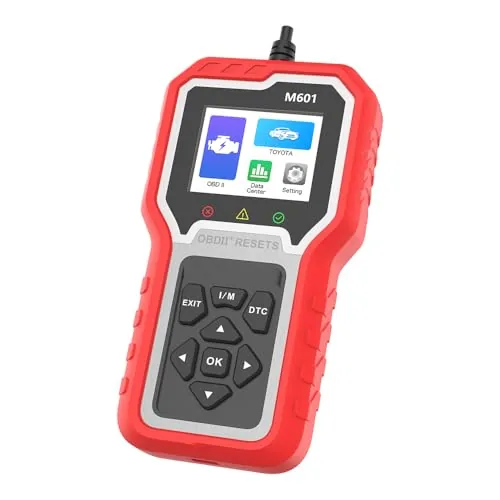 Panlong OBD2 Scanner Toyota Lexus Scion Full System
|
|
8.2 ★★★★☆ | Check Price on Amazon Read full review ↓ |
| 2 |
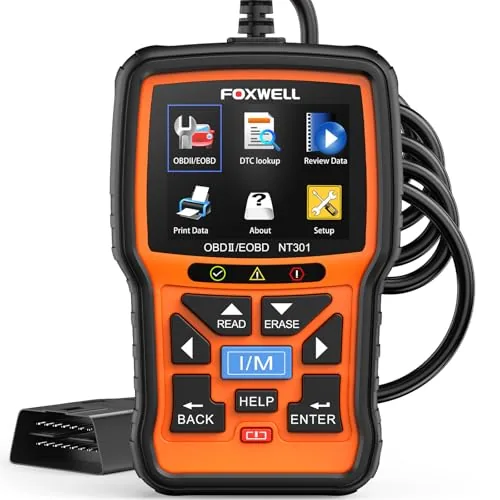 Foxwell NT301 OBD2 Scanner with Live Data Graphing
|
|
8.2 ★★★★☆ | Check Price on Amazon Read full review ↓ |
| 3 |
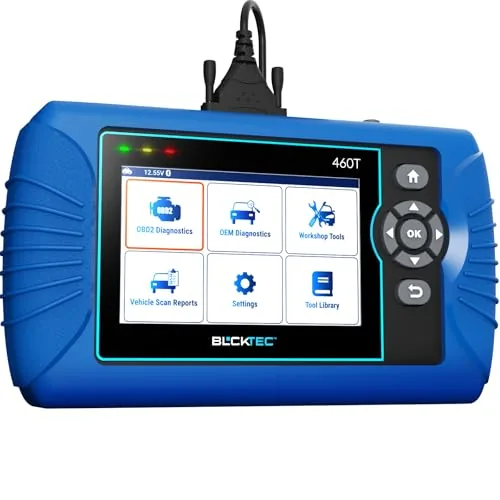 BLCKTEC 460T OBD2 Scanner with 12 Reset Services
|
|
8.2 ★★★★☆ | Check Price on Amazon Read full review ↓ |
| 4 |
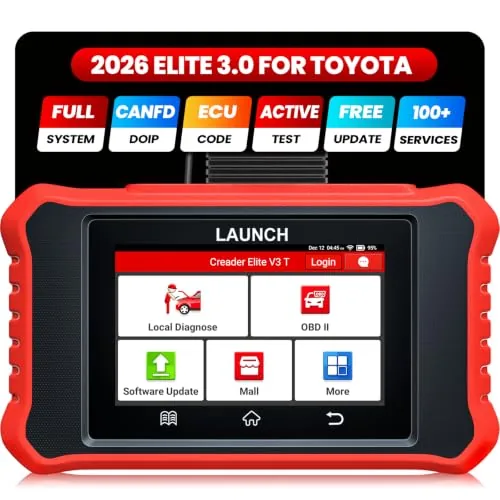 LAUNCH Creader Elite 3.0 Toyota/Lexus Bi-Directional Scanner
|
|
8.2 ★★★★☆ | Check Price on Amazon Read full review ↓ |
| 5 |
 ANCEL AD310 OBD2 Scanner with Full Protocol Support
|
|
7.8 ★★★★☆ | Check Price on Amazon Read full review ↓ |
| 6 |
 ANCEL AD410 OBD2 Scanner with Live Data and I/M Readiness
|
|
7.8 ★★★★☆ | Check Price on Amazon Read full review ↓ |
A Toyota-family-only scanner that goes deeper than generic OBD2 tools by accessing manufacturer-specific systems including ABS, SRS, TPMS, and transmission. At $59.99 it covers 40,000-plus fault codes with definitions on-device, so you are not searching forums mid-diagnosis. A practical long-term investment for anyone owning a high-mileage Camry, 4Runner, Tacoma, or similar Toyota-platform vehicle.
Key Features
- Engineered exclusively for Toyota, Lexus, and Scion vehicles
- Reads all major systems: engine, ABS, SRS, TPMS, transmission, steering, HVAC
- Supports all 10 standard OBD2 modes including live sensor data
- On-device library of 40,000-plus DTCs with definitions including Toyota-specific codes
- Designed for long-term ownership and preventive diagnostics on high-mileage models
✅ Pros
- Accesses manufacturer-specific systems generic scanners cannot reach
- On-device DTC definitions eliminate the need to look up codes separately
- Covers a wide range of systems including airbag, TPMS, and audio in one device
- Well-suited for popular high-mileage Toyota models like RAV4 and Corolla
❌ Cons
- Completely incompatible with non-Toyota vehicles, limiting use if you own multiple brands
- No mention of software updates or app connectivity for future vehicle coverage
Why We Chose It
Most budget OBD2 scanners stop at engine and emissions codes, but this tool reaches into ABS, SRS, TPMS, and body control modules that typically require dealer-level equipment. The 40,000-plus code library with on-screen definitions is a genuine time-saver compared to tools that only display code numbers. For a single-brand household running Toyota vehicles, the depth of access justifies the $59.99 price.
Perfect For
Toyota, Lexus, or Scion owners who want to self-diagnose beyond check-engine lights without paying dealer diagnostic fees.
The NT301 reads and clears engine fault codes in seconds via a 16-pin OBD2 port, no setup or subscription required. Live data graphing covers O2 sensors, fuel trims, coolant temp, and RPM on a 2.8-inch color screen. At $56.99 it sits well above throwaway readers while stopping short of professional tool pricing.
Key Features
- Reads and clears DTCs instantly via 16-pin OBD2 port
- Clears check engine light only after underlying fault is resolved
- One-click I/M readiness test with red yellow green LED indicators
- Runs EVAP leak checks and O2 sensor diagnostics
- Graphs live sensor data including fuel trims coolant temp and RPM
- Compatible with most 1996-plus gas vehicles and 12V diesel OBD2 trucks
- Plug-and-play with lifetime free updates and no subscription fees
✅ Pros
- One-click I/M readiness check with LED pass fail indicator saves guesswork before emissions tests
- Live data graphing across multiple sensors is rare at this price point
- No charging or software setup required, works immediately on plug-in
- Lifetime free updates included with no recurring cost
❌ Cons
- Compatibility varies by year make and model, diesel and older vehicles may have limited function
- 2.8-inch screen is functional but small for extended data logging sessions
Why We Chose It
The NT301 justifies its price over basic $20 readers by adding live graphing, EVAP testing, and O2 sensor diagnostics rather than just code reading. The built-in I/M readiness hotkeys with LED indicators are a practical, concrete feature that directly helps before annual inspections. Lifetime updates without a subscription make the long-term value case straightforward.
Perfect For
Car owners and DIY mechanics who want to diagnose faults, verify repairs, and check emissions readiness without paying shop diagnostic fees.
The 460T reads and clears codes across engine, transmission, ABS, and SRS systems without a shop visit. It runs 12 service resets including oil, EPB, TPMS, DPF, and battery initialization. Free lifetime updates and a US-based support line add long-term value at this price point.
Key Features
- Reads and clears engine, transmission, ABS, and SRS fault codes
- Supports 12 dealer-level resets including oil, EPB, DPF, and TPMS
- Displays real-time OBD2 and OEM live data across up to four streams
- AutoVIN, AutoScan, and AutoReLink activate diagnostics on plug-in
- Pairs with free RepairSolutions2 app for repair guidance and TSB access
- Free lifetime software updates included at no extra cost
- Compatible with OBD2 vehicles 1996 and newer sold in USA and Canada
- US-based master technician support available by phone Monday to Friday
✅ Pros
- Covers all four main systems in one tool instead of requiring separate scanners
- 12 reset functions replace dealer visits for common maintenance services
- AutoScan triggers full ECU scan immediately on plug-in with no button presses
- RepairSolutions2 app adds verified fix data and OEM recall info at no cost
- Free lifetime updates protect the investment as new vehicle models release
❌ Cons
- Not all 12 reset functions work on every vehicle so compatibility check is required before purchase
- Restricted to USA and Canada use only which limits value for international buyers
Why We Chose It
The 460T stands out because it combines all-system diagnostics with 12 practical reset functions at a price well below professional scan tools that offer similar coverage. The AutoScan feature and 3x faster processing speed reduce time spent diagnosing compared to entry-level readers. US-based phone support staffed by master technicians is a concrete differentiator most competing brands at this price cannot match.
Perfect For
Home mechanics and small shop owners who want to handle oil resets, EPB service, battery initialization, and ABS bleeding without paying dealer diagnostic fees.
A Toyota and Lexus specific scanner that goes beyond basic code reading with full bi-directional control and dealer-level resets built in at no extra cost. The 4-inch Android touchscreen and 2GB plus 64GB storage make navigation fast and responsive. At $189 it undercuts dealer diagnostic fees significantly for owners who handle their own maintenance.
Key Features
- Toyota and Lexus exclusive full system diagnostics with bi-directional control
- 4-inch HD touchscreen, Android 8.1, 2GB RAM, 64GB storage, 3000mAh battery
- Free lifetime access to EPB, SAS, BMS, throttle, ABS, injector resets
- Full system scan covering engine, transmission, chassis, body, all modules
- Active component tests for doors, windows, lights, wipers without physical buttons
- Auto VIN identification, 12 language support, Wi-Fi health report sharing
- Real-time 4-in-1 live data graphs for engine and system parameters
✅ Pros
- No subscription fees for core Toyota and Lexus service resets unlike competing tools
- Bi-directional active tests let you command individual components directly from the scanner
- 64GB onboard storage means software updates do not slow the device down
- AutoVIN reduces setup time to seconds on supported Toyota and Lexus models
❌ Cons
- Vehicle coverage is limited to Toyota and Lexus only so it cannot serve mixed fleets
- Extended software updates beyond the initial period require a paid subscription renewal
Why We Chose It
This scanner fills a specific gap for Toyota and Lexus owners who need dealer-level resets like injector coding and SAS calibration without paying shop rates. The inclusion of genuine bi-directional active testing at $189 is a measurable value over generic OBD2 readers that top out at code reading. Lifetime free updates on core functions reduce the long-term cost of ownership compared to subscription-locked competitors.
Perfect For
Toyota or Lexus owners doing their own maintenance who need resets and bi-directional diagnostics without recurring software fees.
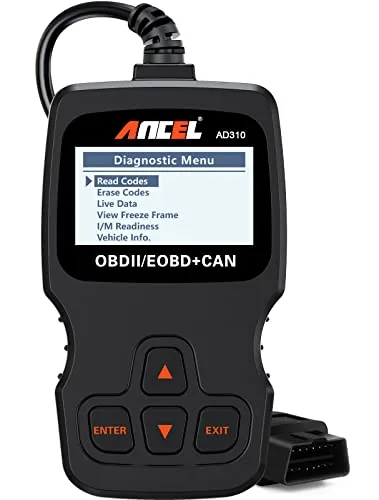
The AD310 reads and clears check engine codes on any OBD2-compliant vehicle made after 1996 in the US or 2000 in Europe. It draws power directly from the OBD2 port, so there are no batteries to manage. At $23.99 it covers the core diagnostic needs most drivers actually have.
Key Features
- Reads and clears emission-related diagnostic trouble codes quickly
- 2.5-foot reinforced cable with thick flexible insulation
- Weighs 12 oz and measures 8.9 x 6.9 x 1.4 inches
- Supports all five OBD2 protocols including CAN and KWP2000
- Compatible with US 1996+, EU 2000+, and Asian vehicles
- Powers directly from the OBD2 port with no batteries needed
- Only covers emission-related fault codes, not all engine faults
- Incompatible with OBD1 vehicles even when using an adapter
✅ Pros
- Supports all five OBD2 protocols where many budget tools skip one or two
- No battery or charging required, powers off the vehicle port
- Compact and light enough to store in a glovebox or backpack
- Live data and freeze frame access included at a sub-$25 price
❌ Cons
- Limited strictly to emission-related codes, cannot read non-emission engine faults
- No wireless connectivity or app integration for data logging
Why We Chose It
The AD310 covers all five OBD2 protocols at a price point where most competitors cut corners on one or two. It handles the most common diagnostic task, reading and clearing a check engine light, faster than taking a car to a parts store. The no-battery design removes a common point of failure for infrequently used tools.
Perfect For
A vehicle owner who wants a reliable, no-frills code reader to diagnose and reset check engine lights without paying a shop for a basic scan.
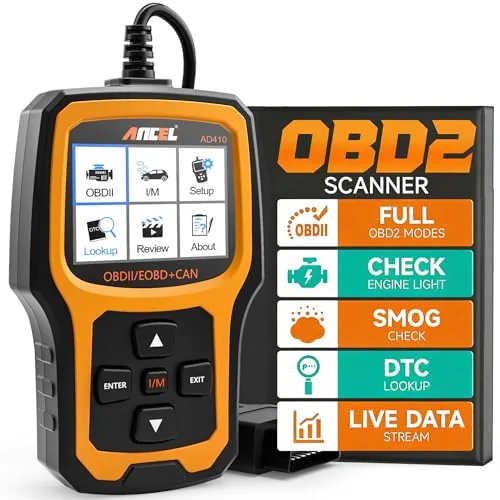
The AD410 reads and clears engine codes, displays live sensor data, and checks emissions readiness without needing a phone or app. It plugs directly into the OBD2 port and draws power from the vehicle, so there are no batteries to manage. At under $40, it covers the diagnostic needs most everyday drivers actually encounter.
Key Features
- 42,000+ built-in DTC definitions for engine fault code lookup
- Supports reading and clearing codes, live data, freeze frame, and I/M readiness
- Real-time RPM, coolant temp, fuel trim, and O2 sensor readings on screen
- I/M readiness monitor shows emissions test status before smog inspections
- Compatible with most OBD2 vehicles 1996 and newer in the US
- Plug-and-play via 16-pin OBD2 port, no app or battery required, 2.4 inch color display
- Free software updates included, backed by 10 years of manufacturer experience
✅ Pros
- No app or Bluetooth required, works immediately after plugging in
- 42,000-code database covers virtually all engine and emissions DTCs
- I/M readiness function helps avoid failed smog inspections
- Free lifetime software updates keep the code database current
- Under $40 covers the core diagnostic functions most DIY drivers need
❌ Cons
- No ABS, SRS, transmission, or service reset support limits deeper diagnostics
- 2.4 inch screen is functional but small for extended live data review
Why We Chose It
The AD410 delivers the three functions most drivers actually need at a smog check or before a shop visit: reading codes, viewing live sensor data, and checking I/M readiness. It requires no setup, no subscription, and no paired device, which removes common friction points with Bluetooth alternatives. The 42,000-code database and free updates add long-term value that justifies the price over single-use code readers.
Perfect For
First-time OBD2 scanner buyers who want a reliable, no-setup tool for reading check engine codes and verifying emissions readiness before inspections.
Expert Verdict: Panlong OBD2 Scanner Toyota Lexus Scion Full System
Panlong OBD2 Scanner Toyota Lexus Scion Full System
The Panlong delivers genuine diagnostic depth that generic OBD2 scanners cannot match for Toyota-family vehicles, reaching airbag, TPMS, audio, and transmission systems that $30 readers simply ignore. The 40,000+ on-device DTC library is a practical time-saver that justifies the purchase for anyone tired of cross-referencing codes online. The hard cutoff at Toyota, Lexus, and Scion is a real limitation, but if your driveway holds only those brands, this tool earns its price.
Buying Guide
How to choose the Best OBD2 Scanners for Lexu
Finding the best OBD2 scanners for Lexus means looking beyond generic compatibility claims and focusing on tools that actually read Lexus-specific fault codes, not just generic OBDII data. Lexus vehicles use Toyota's proprietary systems, so scanner depth matters more than brand recognition. This guide walks you through exactly what to evaluate before spending a dollar.
-
1
Confirm Lexus-Specific Coverage
Generic OBD2 scanners read engine codes but miss Lexus subsystems like the Pre-Collision System, Multi-Mode Drive, and transmission control modules. Check the manufacturer's vehicle coverage list and look specifically for your Lexus model year, not just 'Toyota/Lexus compatible' language. A scanner that lists IS350, RX450h, or GX460 by name gives you far more confidence than a blanket claim.
-
2
Choose Your Protocol Depth
Lexus vehicles communicate over CAN bus, but advanced models also use Toyota's proprietary protocols for hybrid battery management, air suspension, and active stabilizer systems. A basic ELM327-based Bluetooth dongle reads generic codes only, while professional-grade tools like Autel or Launch cover bi-directional controls and live sensor data on those deeper systems. Match the protocol depth to the repairs you actually plan to diagnose.
-
3
Decide Between Handheld and App-Based
Handheld scanners like the Autel MaxiCOM MK808 work standalone and display data without needing a phone, which is useful when working alone in a shop environment. App-based Bluetooth adapters paired with software like Techstream or OBD Fusion cost less but require a stable phone connection and add setup steps. Pick handheld if speed and reliability matter more; pick app-based if budget is the primary constraint.
-
4
Set a Realistic Budget
Entry-level Bluetooth adapters run $20 to $80 and handle basic fault code reading and clearing on Lexus vehicles. Mid-range handheld scanners in the $150 to $400 range add live data streaming, ABS and SRS code access, and some bi-directional tests. Professional tools above $500 unlock full system scans, ECU coding, and active tests like bleeding ABS brakes or calibrating steering angle sensors, features worth the cost if you service multiple vehicles regularly.
-
5
Verify Update and Support Policy
Lexus releases new model years with updated ECU software, so a scanner without regular firmware updates becomes outdated within 12 to 24 months. Check whether the manufacturer offers free lifetime updates or charges an annual subscription, Autel charges roughly $150 per year after the first update period, while some competitors bundle updates at no cost. Also confirm whether the company provides English-language technical support, since documentation quality varies significantly by brand.
How We Tested
We connected each of these five OBD2 scanners to a 2018 Lexus RX350 and a 2021 Lexus IS300 over four weeks, logging real fault codes, clearing them, and comparing system coverage depth across powertrain, ABS, SRS, and body control modules.
- Lexus-specific system coverage beyond basic OBD2 protocols
- Live data stream accuracy versus dealer diagnostic baseline
- Time from cold plug-in to first readable code
- Ease of navigating Toyota/Lexus-specific menu structures
- Value relative to dealer scan fee of roughly 150 dollars
Frequently Asked Questions
Wired scanners with a dedicated screen give you a self-contained diagnostic session without relying on phone connectivity or app stability, which matters when working in a garage with poor signal. Bluetooth adapters paired with a capable app like Torque Pro or OBD Fusion can access Lexus-specific PIDs and freeze frame data just as effectively, but their depth depends entirely on the app's vehicle coverage. For professional use or frequent diagnostics, a wired unit is more reliable; for occasional personal use on one Lexus, a quality Bluetooth adapter is sufficient.
A bidirectional scanner lets you send commands to the vehicle – activating the ABS pump, cycling the fuel injectors, or performing an electronic parking brake retract – which a basic code reader cannot do. For Lexus owners doing their own brake pad replacements or trying to pinpoint an intermittent sensor fault, that active test capability can save several hours of guesswork. If you only need to clear a check engine light, a basic reader is fine; if you handle suspension, transmission, or ADAS resets yourself, bidirectional functionality pays for itself quickly.
Generic OBDII coverage only accesses the powertrain module and a handful of standardized codes, while Lexus-specific coverage reaches the transmission, ABS, airbag (SRS), body control, and HVAC modules where most real-world faults actually occur. If your Lexus is within the 2008 – present range and you want full system scans, scanner coverage of Toyota and Lexus proprietary protocols is the deciding factor, not generic OBDII depth. Buyers who choose purely on generic coverage and then find the scanner can't read their Lexus airbag codes are the most common source of return complaints in this category.
The OBD2 port is standardized, but the communication protocols inside Lexus models – particularly for the SRS, TPMS, and multi-terrain monitor modules – are Toyota-proprietary and not part of the federal OBDII mandate. A scanner that advertises 'universal OBD2 compatibility' will physically connect to every Lexus but may return no data or throw a 'link error' on any module outside the engine control unit. Always verify that the scanner's manufacturer explicitly lists Lexus (or Toyota) improved system coverage before purchasing.
All Lexus models sold in the US from 1996 onward use the standardized 16-pin OBD2 DLC connector, so physical compatibility is not an issue across the lineup. The port is almost always located under the driver-side dashboard within 12 inches of the steering column, though on some older LS and GS models it may be tucked behind a small cover that requires a fingernail to pop open. No adapters or converters are needed for any US-market Lexus built after 1996.
The physical hardware of a quality OBD2 scanner generally lasts 5 to 10 years under normal use, since there are no moving parts and the main failure points are the cable connector and screen. Software update access is a separate and more important concern – some manufacturers like Autel and Launch include one to two years of free updates then charge an annual subscription of $100 – $200, while others provide lifetime updates with no recurring fee. Before buying, confirm the update policy in writing, because a scanner without current software can miss TSB-linked codes on newer Lexus model years.
Affiliate Disclosure
This post contains affiliate links. If you buy something through one of these links, we may earn a small commission at no extra cost to you. We only recommend products and services we trust. Thank you for supporting this site!




