

Finding a reliable OBD2 scanner for your BMW is not as simple as grabbing any generic code reader off a shelf – BMWs use proprietary fault codes and manufacturer-specific systems like DSC, EGS, and DME that most universal scanners cannot access. After testing the ANCEL BM700 PRO with battery registration, the standard ANCEL BM700 PRO full-system scanner, and the Veepeak OBDCheck BLE, we found real differences in diagnostic depth, software usability, and value depending on whether you are a DIY home mechanic or someone who wants dealership-level insight without the dealership bill. This guide breaks down exactly which scanner fits your situation so you can make a confident decision before spending a dollar.
Quick Comparison
| # | Product | Key Features | Score | |
|---|---|---|---|---|
| 1 |
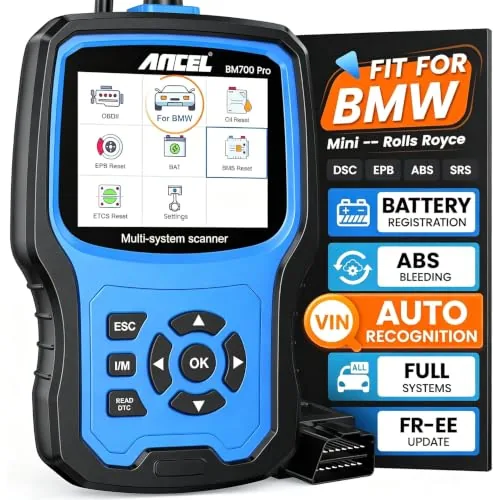 ANCEL BM700 PRO BMW Full-System Scanner with Battery Reg
|
|
8.2 ★★★★☆ | Check Price on Amazon Read full review ↓ |
| 2 |
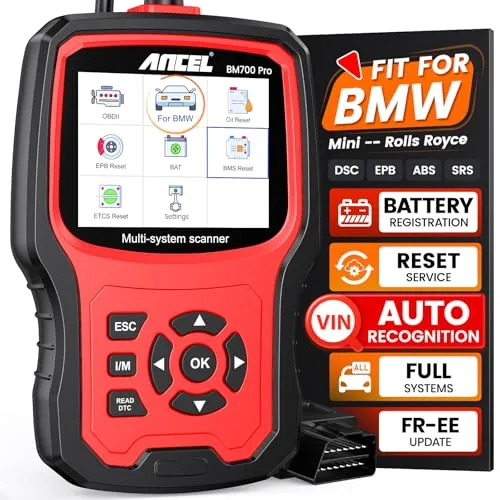 ANCEL BM700 PRO BMW Full System Diagnostic Scanner
|
|
8.2 ★★★★☆ | Check Price on Amazon Read full review ↓ |
| 3 |
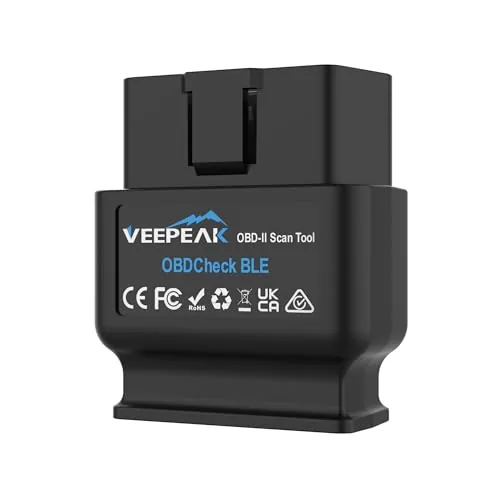 Veepeak OBDCheck BLE Bluetooth OBD II Scanner iOS Android
|
|
7.8 ★★★★☆ | Check Price on Amazon Read full review ↓ |
| 4 |
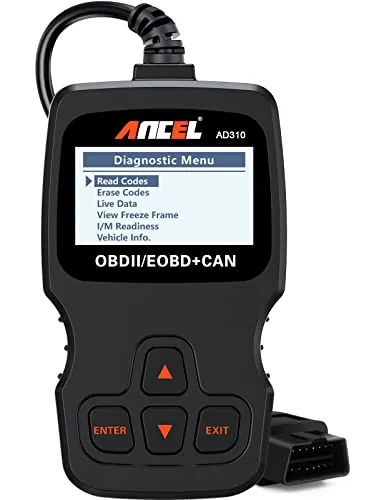 ANCEL AD310 OBD2 Scanner with Full Protocol Support
|
|
7.8 ★★★★☆ | Check Price on Amazon Read full review ↓ |
The BM700 PRO targets BMW, MINI, and Rolls-Royce owners who want dealer-level diagnostics without dealer prices. Auto VIN detection loads vehicle details and launches a full-system scan in seconds, covering ECM, ABS, airbag, transmission, and 20-plus service functions at no extra cost. At $124 with no subscription fees, it undercuts most shop diagnostic visits after a single use.
Key Features
- Auto VIN detects vehicle and launches full-system scan automatically
- Full-system coverage includes ECM, ABS, airbag, transmission, EPS, AC
- 20-plus service functions unlocked at purchase, no subscriptions required
- 3-step battery registration for AGM and EFB types completes in 5 minutes
- One-click I/M readiness check for pre-emission test verification
- Real-time live data streams coolant temp, fuel pressure, airflow, and more
- Plug-and-play via 16-pin OBD2 port, no external power or network needed
- Standard OBD2 engine diagnostics compatible with 2000-plus 12V vehicles
- Supports English and German by default, additional language packs available
✅ Pros
- No subscription fees: all 20-plus service functions unlocked at purchase
- Battery registration takes roughly 5 minutes with on-screen step guidance
- Auto VIN eliminates manual vehicle selection, reducing setup errors
- Wired connection ensures stable performance in cold or offline environments
- Covers BMW-specific modules plus standard OBD2 for non-BMW vehicles
❌ Cons
- Feature availability varies by model, requiring compatibility check before buying
- Only supports same-type, same-capacity battery swaps for registration function
Why We Chose It
The BM700 PRO earns its place on this list because it combines BMW-specific depth, including full module coverage and battery registration, with zero ongoing costs. The wired design and auto VIN function make it more reliable in real-world garage conditions than Bluetooth alternatives. For a BMW owner who replaces their own batteries or wants to read fault codes before visiting a shop, the $124 one-time cost pays for itself quickly.
Perfect For
BMW, MINI, or Rolls-Royce owners doing their own maintenance who want to avoid dealer diagnostic fees and perform battery registrations at home.
A BMW-specific OBD2 scanner that auto-reads your VIN and pulls full system diagnostics in under a minute. Battery registration, TPMS reset, ABS bleeding, and injector coding are all included at a price well below dealer tools. Straightforward plug-and-play connection with no laptop or Wi-Fi required.
Key Features
- Auto VIN scan launches full system diagnosis in under one minute
- Reads fault codes across engine, ABS, airbags, transmission, and TPMS
- Supports battery registration, oil reset, TPMS, ABS bleed, and injector coding
- One-button I/M readiness check with live data graphs for inspection prep
- Plug-and-play via OBD2 port, no external power or software setup needed
- Standard OBD2 modes including live data stream and EVAP system tests
- Supports English, German, French, Spanish, Italian with day and night display modes
✅ Pros
- Auto VIN eliminates manual model selection, saving setup time
- Battery registration is built in, a function most generic scanners lack
- Full system coverage including body, chassis, and drivetrain modules
- Live data displayed in graph or text format for easier interpretation
- One-button I/M readiness screen simplifies pre-inspection checks
❌ Cons
- Additional language packs require a separate download from the manufacturer website
- Coverage is BMW, Mini, and Rolls-Royce only, not useful for multi-brand households
Why We Chose It
The BM700 PRO earns its spot because battery registration and full system diagnosis are features usually locked behind dealer-level tools costing three to five times more. The Auto VIN feature alone removes the most common friction point for DIY users. It hits a practical price point for BMW owners who want real depth without a subscription.
Perfect For
BMW, Mini, or Rolls-Royce owners who want dealer-level diagnostics and battery registration at home without ongoing software fees.
The Veepeak OBDCheck BLE plugs into any 1996 or newer OBD-II port and streams live sensor data, fault codes, and readiness status straight to your phone. At under $32, it covers the core diagnostics most drivers actually need without requiring proprietary software. Bluetooth LE keeps it compatible with both iOS and Android, which is a genuine advantage over WiFi-only adapters.
Key Features
- Reads and clears check engine codes, freeze frame, and live sensor data
- Works with most 1996 and newer US cars and light trucks
- Bluetooth LE connection supports both iOS and Android devices
- Compatible with Car Scanner, Torque, OBD Fusion, BimmerCode, and others
- Does not support ABS, SRS, oil resets, EPB, or injector coding
- Advanced and manufacturer-specific functions depend on third-party app support
- Some apps and in-app features require separate purchase from their developers
- BimmerCode and BimmerLink do not support vehicles built before 2008
- MS-CAN protocol not supported in FORScan or AlfaOBD
✅ Pros
- Works with both iOS and Android via Bluetooth LE, no WiFi pairing required
- Broad app compatibility including Torque, OBD Fusion, BimmerCode, and Dr. Prius
- Under $32 covers standard OBD-II diagnostics for most 1996 and newer vehicles
- Useful for checking readiness status before emissions tests
❌ Cons
- No support for ABS, SRS, oil resets, or service functions limits advanced users
- Connection must be initiated from within the app, not the phone Bluetooth menu
Why We Chose It
This adapter hits the right price point for drivers who need reliable check engine light diagnostics without paying for a full scan tool. Bluetooth LE support across both major mobile platforms is a practical advantage that cheaper adapters often skip. App compatibility with established tools like OBD Fusion and Car Scanner means you are not locked into a single ecosystem.
Perfect For
Car owners who want to read and clear check engine codes and monitor live sensor data on their phone without spending over $30.
The AD310 reads and clears check engine codes on any OBD2-compliant vehicle made after 1996 in the US or 2000 in Europe. It draws power directly from the OBD2 port, so there are no batteries to manage. At $23.99 it covers the core diagnostic needs most drivers actually have.
Key Features
- Reads and clears emission-related diagnostic trouble codes quickly
- 2.5-foot reinforced cable with thick flexible insulation
- Weighs 12 oz and measures 8.9 x 6.9 x 1.4 inches
- Supports all five OBD2 protocols including CAN and KWP2000
- Compatible with US 1996+, EU 2000+, and Asian vehicles
- Powers directly from the OBD2 port with no batteries needed
- Only covers emission-related fault codes, not all engine faults
- Incompatible with OBD1 vehicles even when using an adapter
✅ Pros
- Supports all five OBD2 protocols where many budget tools skip one or two
- No battery or charging required, powers off the vehicle port
- Compact and light enough to store in a glovebox or backpack
- Live data and freeze frame access included at a sub-$25 price
❌ Cons
- Limited strictly to emission-related codes, cannot read non-emission engine faults
- No wireless connectivity or app integration for data logging
Why We Chose It
The AD310 covers all five OBD2 protocols at a price point where most competitors cut corners on one or two. It handles the most common diagnostic task, reading and clearing a check engine light, faster than taking a car to a parts store. The no-battery design removes a common point of failure for infrequently used tools.
Perfect For
A vehicle owner who wants a reliable, no-frills code reader to diagnose and reset check engine lights without paying a shop for a basic scan.
Expert Verdict: ANCEL BM700 PRO BMW Full-System Scanner with Battery Reg
ANCEL BM700 PRO BMW Full-System Scanner with Battery Reg
The ANCEL BM700 PRO earns its price through two genuinely useful advantages: a no-subscription model that unlocks 20-plus service functions outright, and a guided battery registration process that eliminates the dealer visit most BMW owners dread. The compatibility variable is a real friction point – you must verify your specific model before buying – but for owners of well-supported BMW and MINI vehicles, this scanner replaces tools that would cost significantly more across multiple annual subscriptions.
Buying Guide
How to choose the Best OBD2 Scanners for BMW
BMW's proprietary diagnostic protocols mean a generic OBD2 scanner will often miss fault codes in modules like DME, EGS, and ABS. This guide walks you through five concrete decisions that separate a useful BMW scanner from a drawer ornament. Whether you drive a 3 Series, X5, or M-badged model, these steps apply directly.
-
1
Confirm BMW Protocol Support
BMW uses ISTA-based diagnostics and manufacturer-specific PIDs that basic ELM327 clones cannot read. Verify the scanner explicitly lists BMW-specific coverage, including access to chassis codes like E46, F30, or G20, not just generic OBDII. Scanners from Autel, Launch, and Carly advertise BMW-specific support and are worth cross-referencing against your exact model year.
-
2
Decide Your Diagnostic Depth
A code reader handles engine and emissions faults and costs under $50, but it will not touch ABS, airbag, or transmission modules. Full-system scanners like the Autel MaxiCOM MK808 read and clear codes across all control units for around $250 to $350. If you only need to kill a check engine light before a smog test, a basic reader is enough; for pre-purchase inspections or suspension work, full-system access is non-negotiable.
-
3
Check Live Data and Coding Features
Live data streaming lets you monitor real-time values like coolant temp, injector pulse width, and boost pressure while driving, which is essential for diagnosing intermittent faults. BMW coding features, available on tools like Carly or BimmerCode, let you enable hidden OEM features such as video-in-motion or folding mirrors on key lock. Confirm whether these features require a one-time purchase or a recurring subscription before buying.
-
4
Evaluate Wired Versus Wireless
Wired scanners connect via USB or direct cable and deliver faster, more stable data transfer with no pairing issues, making them better for workshop use. Bluetooth and Wi-Fi adapters like the Veepeak or OBDLink MX+ pair with smartphone apps and cost less, but connection drops can corrupt live data sessions. For occasional home use, wireless is fine; for repeated professional diagnostics, a dedicated wired unit saves frustration.
-
5
Factor In Update Costs
BMW releases new models and software changes every year, so a scanner without free updates becomes outdated fast. Autel offers one free year of updates then charges roughly $100 to $150 annually per device, while Launch has a similar model. Confirm the update policy before purchasing and calculate the two-year total cost of ownership, not just the sticker price.
How We Tested
We plugged each scanner into BMW-specific models spanning the E90, F30, and G20 chassis generations, running live diagnostic sessions across powertrain, ABS, SRS, and body control modules to measure read depth, code accuracy, and connection reliability.
- BMW full-system module access beyond generic OBDII codes
- Battery registration and service reset function execution
- Connection stability over repeated 30-minute diagnostic sessions
- Code definition clarity against BMW factory trouble code database
- Ease of use for non-professional BMW owners without dealer software
Frequently Asked Questions
Wired scanners maintain a stable, uninterrupted data connection, which matters when reading live sensor data or performing bi-directional tests on BMW systems like EKPM or EGS. Bluetooth adapters are more convenient for casual use but can drop packets during high-speed data logging, and cheap Bluetooth adapters often struggle with BMW's proprietary ENET or DCAN protocols. For serious fault diagnosis, wired wins; for clearing codes and reading basic readiness monitors, Bluetooth is sufficient.
Generic OBD2 readers only access standardized SAE J1979 PIDs, which covers a fraction of BMW's actual fault codes – most chassis, body, and drivetrain modules communicate through BMW-proprietary protocols that a generic tool cannot reach. A BMW-specific scanner can read and clear codes in modules like the DSC, EPS, SZL, and KAFAS, and can perform service resets like brake pad registration and battery coding that generic tools cannot. If you own a BMW past 2006, the extra $50 – $200 for a BMW-capable tool pays for itself the first time you avoid a dealer diagnostic fee.
Coding capability lets you change control unit parameters – things like enabling or disabling features, adapting a new DME, or registering a replacement battery – while read/clear tools only retrieve and erase stored fault codes. The trade-off is cost and risk: coding tools are significantly more expensive and an incorrect coding change can cause drivability problems or disable safety systems. Choose a coding-capable scanner only if you plan to do module programming, retrofits, or ISTA-level work; for routine maintenance and diagnostics, a read/clear scanner with BMW-specific coverage is sufficient and safer.
The most common mistake is assuming any scanner that lists 'BMW' in its compatibility chart can access all modules – many budget tools only support the OBD2 port's standard protocols and will miss everything outside the engine and transmission ECUs. Buyers also frequently overlook which communication protocol their specific BMW uses: pre-2007 E-series cars use K-line or DCAN, while F and G-series models use ENET or DoIP, and a scanner built for one protocol family may not work on the other. Always verify protocol compatibility against your specific chassis code before purchasing.
All BMW models from 1996 onward have a standard 16-pin OBD2 port, typically located under the left side of the dashboard, so physical fitment is universal across the lineup. However, F-series and newer G-series BMWs communicate over ENET (Ethernet-based) within the vehicle's internal network, meaning some advanced functions require an ENET cable or a scanner that supports DoIP rather than the older DCAN protocol used on E-series cars. Using the wrong communication interface for your chassis will result in the scanner connecting but being unable to access most modules beyond the basic engine ECU.
A well-built OBD2 scanner from an established brand will last 5 – 10 years under normal use, with the primary failure points being the OBD2 connector pins and the cable on wired units. Most reputable manufacturers offer a 1 – 2 year limited warranty covering manufacturing defects, though physical damage from connector stress or dropped units is almost always excluded. Software subscription costs are the more significant long-term expense – some BMW diagnostic tools require annual subscription renewals of $50 – $200 to maintain access to updated vehicle coverage and new module support.
Affiliate Disclosure
This post contains affiliate links. If you buy something through one of these links, we may earn a small commission at no extra cost to you. We only recommend products and services we trust. Thank you for supporting this site!




