

Shopping for a TOPDON scanner means choosing between a compact Bluetooth dongle, a mid-size handheld, and a full-featured 10-inch tablet – and the wrong pick wastes money on features you’ll never use or leaves you short on the ones you actually need. After hands-on testing with the TOPDON ONE, AD800BT V2.0, and AD900 Lite, we broke down exactly what each tool does well, where it falls short, and which type of user it’s built for. Whether you’re a DIY home mechanic chasing a check engine light or a working technician running bidirectional tests and system resets daily, one of these three scanners is the right fit – this guide will tell you which one.
Quick Comparison
| # | Product | Key Features | Score | |
|---|---|---|---|---|
| 1 |
 TOPDON ONE Bidirectional Scan Tool 10.1in Professional
|
|
8.5 ★★★★☆ | Check Price on Amazon Read full review ↓ |
| 2 |
 TOPDON AD800BT V2.0 Bidirectional OBD2 Scanner
|
|
8.4 ★★★★☆ | Check Price on Amazon Read full review ↓ |
| 3 |
 TOPDON AD900 Lite Bidirectional OBD2 Scanner 8-Inch
|
|
8.2 ★★★★☆ | Check Price on Amazon Read full review ↓ |
| 4 |
 TOPDON AD600S 4-System OBD2 Scanner with Service Resets
|
|
8.2 ★★★★☆ | Check Price on Amazon Read full review ↓ |
| 5 |
 TOPDON AD800BT 2 Bidirectional OBD2 Scanner Lifetime Updates
|
|
8.2 ★★★★☆ | Check Price on Amazon Read full review ↓ |
| 6 |
 TOPDON TopScan Lite Bidirectional OBD2 Scanner with AI
|
|
7.8 ★★★★☆ | Check Price on Amazon Read full review ↓ |
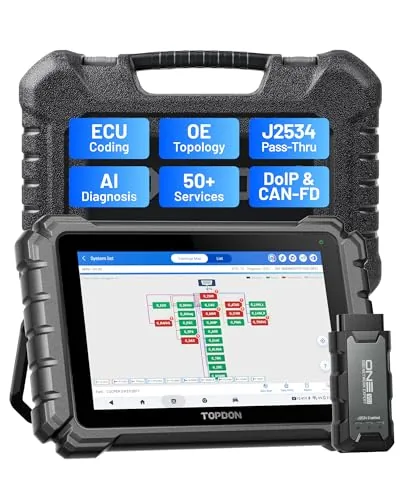
The TOPDON ONE targets independent shops that want dealer-level diagnostics without paying dealer prices. It combines ECU coding, J2534 pass-thru, and 50-plus service functions in one tablet-based unit. At $699.98, it sits in serious professional territory and backs that price with CAN-FD and DoIP protocol support for late-model vehicles.
Key Features
- 10.1-inch touchscreen with dual WiFi, 3x faster than Bluetooth
- J2534 pass-thru support enables OEM software integration via RLink platform
- OE topology mapping visualizes ECU network with real-time module communication
- 50-plus service functions including ADAS calibration, DPF regen, and ABS bleed
- ECU coding and flash for BMW, VW, Audi, Benz, Porsche, Toyota, Nissan
- CAN-FD and DoIP protocol support for 2013 and newer vehicle networks
- VAG guided functions with step-by-step procedures and torque specifications
- AI assistant covers 5 million fault codes with wiring diagrams and repair guidance
✅ Pros
- J2534 pass-thru with RLink platform replaces multiple OEM tools for 10 major brands
- CAN-FD and DoIP coverage reaches vehicles as new as 2020 GM and Chrysler
- OE topology mapping shows live module communication, not just stored codes
- VAG guided functions include disassembly steps and torque specs, reducing guesswork
- Topfix AI links fault codes to wiring diagrams, cutting diagnostic time on complex faults
❌ Cons
- ECU coding is limited to 10 brands, so shops with heavy Asian or domestic-only workloads may hit gaps
- Vehicle-specific feature availability varies, requiring pre-purchase verification for edge-case models
Why We Chose It
The J2534 pass-thru capability paired with TOPDON’s RLink platform gives independent shops access to OEM-level coding without buying separate factory tools for each brand. CAN-FD and DoIP support means it handles newer high-speed networks that most mid-range scanners skip entirely. The OE topology map with live module communication data moves it clearly past basic bidirectional tools.
Perfect For
Independent shop owners and lead technicians who regularly work on European and Japanese vehicles and want to bring ECU coding and ADAS calibration in-house instead of subcontracting.
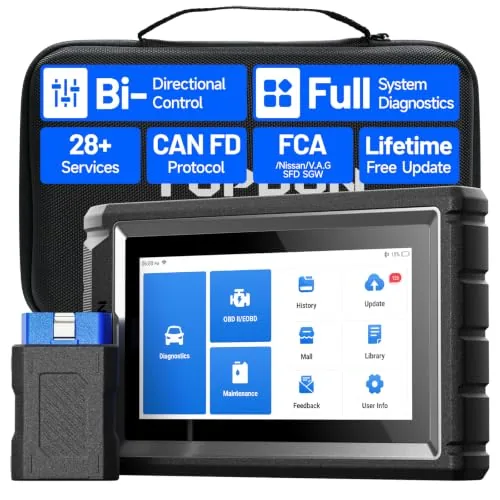
The AD800BT V2.0 steps up from basic code readers by adding real bidirectional control, letting you trigger actuators and test components without guessing. It covers 28 service reset functions and reads every major vehicle system including ABS, airbag, and TPMS. At $299.99 with lifetime-free updates, it sits in competitive territory for serious DIYers and independent shop technicians.
Key Features
- Bidirectional control activates solenoids, actuators, and sensors in real time
- Covers 10,000-plus vehicle models including domestic and import brands
- 28-plus service resets including oil, EPB, DPF, ABS bleeding, and injector coding
- Full system scan covers ECM, transmission, ABS, airbag, TPMS, and more
- Bluetooth VCI dongle provides wireless diagnostics up to 33 feet range
- AutoVIN identifies vehicle make, model, and year in one tap
- Software updates delivered over WiFi with 2 years free included
- Supports 18 languages and includes 24/7 online technical support
- Durable casing designed for daily workshop use
✅ Pros
- Bidirectional active tests replace guesswork when diagnosing actuator and sensor faults
- 28 service reset functions cover the most common shop jobs without upselling
- Wireless Bluetooth operation keeps the cable out of your way while working under the hood
- AutoVIN cuts vehicle setup time to a single button press in most cases
- WiFi updates require no laptop or USB cable, reducing update friction significantly
❌ Cons
- AutoVIN does not work on all vehicles, requiring manual VIN entry as a fallback
- Lifetime free updates language on the listing conflicts with the 2-year free update detail in the fine print, worth clarifying before purchase
Why We Chose It
The V2.0 upgrade adds genuine bidirectional control at a price point where most competitors only offer passive diagnostics. The 28 service reset functions cover the jobs that actually bring vehicles into independent shops, not just the edge cases. Wireless operation and over-the-air updates reduce the friction that slows down daily diagnostic work.
Perfect For
Independent shop technicians and advanced DIYers who need dealer-level bidirectional testing on a mid-range budget without paying for a subscription model.
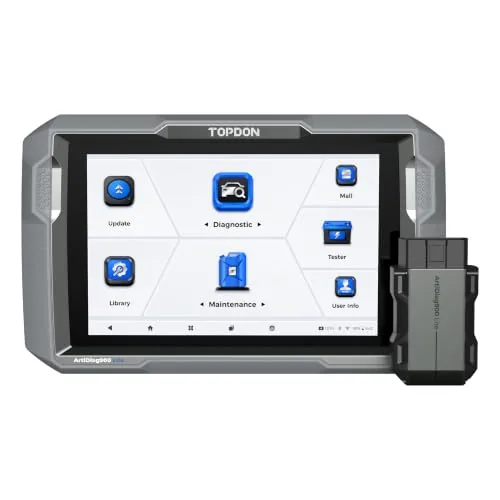
The AD900 Lite is a shop-grade diagnostic tablet that sends active commands to vehicle ECUs, letting you test individual components like injectors and wipers instead of just reading codes. It runs on Android 11 with a 10000mAh battery rated for 12 hours of use and connects wirelessly via Bluetooth 5.0 up to 33 feet. At $299, it sits in a competitive mid-range bracket for technicians who need bidirectional capability without paying flagship prices.
Key Features
- Android 11, 5x faster CPU, 10000mAh battery for 12-hour runtime
- Bidirectional control tests injectors, pumps, windows, wipers, mirrors
- Bluetooth 5.0 VCI with 33-foot wireless diagnostic range
- DTC repair guidance compatible with select Chrysler, Dodge, Jeep, Fiat models
- Full system scan covers engine, ABS, airbag, TPMS, transmission, and more
- 8 reset services including oil, EPB, DPF, ABS bleed, and airbag
- Covers 1996 to 2025 vehicles, 60-plus makes, 10000-plus car coverage
- 1-year warranty, lifetime free software updates, 30-day return window
✅ Pros
- Bidirectional active testing speeds up component diagnosis significantly
- Wireless Bluetooth 5.0 connection removes cable restrictions in tight bays
- 8-inch touchscreen and 12-hour battery support full-day shop use
- Lifetime free software updates protect long-term value of the purchase
- Full system coverage across all modules with live data streaming
❌ Cons
- DTC repair guide is currently limited to select Chrysler group vehicles from 2010 to 2014
- Battery testing requires an optional add-on purchase not included at base price
Why We Chose It
Bidirectional control at this price point is rare and directly reduces diagnostic time by letting technicians command components rather than interpret symptoms. The hardware specs, including Android 11, Bluetooth 5.0, and a 10000mAh battery, are a meaningful step above entry-level scanners. Lifetime free updates make the upfront cost more defensible over a multi-year ownership period.
Perfect For
Independent mechanics and serious DIYers who need shop-level bidirectional diagnostics without the cost of a dealer-tier tool.
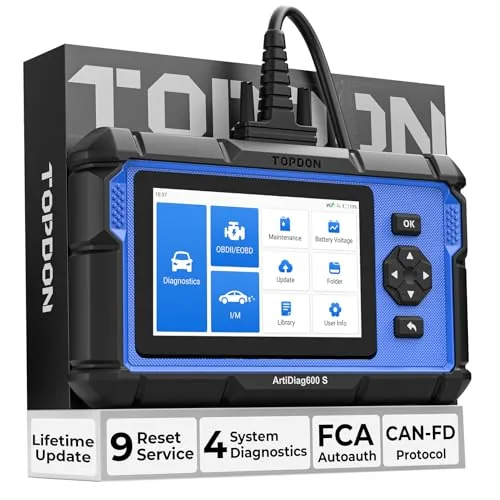
The AD600S covers engine, ABS, transmission, and SRS diagnostics in a single handheld unit, giving home mechanics access to repair shop capabilities for a one-time cost. Nine built-in service functions handle common maintenance jobs like oil resets, EPB calibration, and TPMS without needing a separate subscription. Free lifetime Wi-Fi updates keep vehicle coverage current without recurring fees.
Key Features
- Lifetime software updates via Wi-Fi, no subscription fees required
- Reads and clears codes across engine, ABS, transmission, and SRS systems
- Nine service functions including oil reset, EPB, BMS, TPMS, and injector coding
- Covers 90-plus vehicle brands with CAN-FD and FCA gateway support
- 5-inch Android 11 touchscreen with AutoVIN, 32GB storage, and live data graphs
✅ Pros
- No ongoing subscription cost for software updates or core service functions
- CAN-FD and FCA AutoAuth support extends compatibility to newer vehicle platforms
- 4-in-1 merged waveform live data view aids real-time diagnosis without a laptop
- AutoVIN speeds up vehicle identification and reduces manual entry errors
❌ Cons
- Full 30-service access reverts to 9 functions after a 30-day trial, limiting advanced users
- Battery requires weekly charging even in storage or the device may fail to power on
Why We Chose It
The AD600S delivers four-system diagnostics and nine service resets at a price point well below professional-grade tools, with no annual fee eating into long-term value. CAN-FD and FCA gateway support is uncommon at this price and meaningfully extends compatibility with post-2018 vehicles. The 5-inch touchscreen with waveform graphing makes it usable in the driveway without connecting to a separate PC.
Perfect For
A DIYer or part-time mechanic who regularly handles their own brake, battery, and oil service on multiple vehicle makes and wants one tool that grows with their fleet.
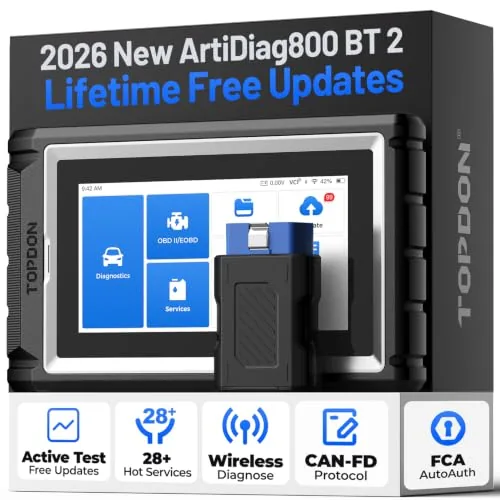
The AD800BT 2 steps up from basic code reading by letting you send commands directly to vehicle actuators, so you can test components without guesswork. Wireless Bluetooth connectivity reaches 33 feet, and 28 reset services cover the most common maintenance tasks in one tool. The switch to lifetime free software updates removes a recurring cost that undercuts competitors at this price point.
Key Features
- Lifetime free software updates, no recurring subscription fees
- Bidirectional control sends commands to ECU and actuators directly
- 28 reset services including Oil, EPB, DPF, ABS Bleeding, and SAS
- Full system scanning covers ECM, ABS, TPMS, BMS, EVAP, and more
- Bluetooth 4.0 VCI dongle with 33-foot wireless operating range
- AutoVIN identifies make, model, and year at single touch
- Compatible with 96 vehicle brands and OBDII vehicles from 1996 onward
- Includes protective case, USB-C cable, power adapter, and VCI dongle
✅ Pros
- Lifetime update policy eliminates annual software fees common at this price tier
- Bidirectional control lets you activate lights, locks, wipers, and mirrors for targeted diagnosis
- 28 service resets cover the procedures most shops and DIYers actually need
- 64GB internal storage and wireless operation reduce cable clutter during repairs
- 96-brand vehicle coverage handles most domestic, Asian, and European makes
❌ Cons
- AutoVIN does not work on all vehicles, requiring manual VIN entry as a fallback
- Menu availability for resets varies by make, model, and year so some services may not appear
Why We Chose It
At $299, the AD800BT 2 earns its price primarily through bidirectional control and lifetime updates, two features typically found on tools costing $100 to $200 more. The 28 service resets are practically organized and cover procedures like DPF regeneration and injector coding that cheaper scanners skip entirely. It is a one-time purchase that stays current without penalty.
Perfect For
Independent repair technicians and serious DIYers who need actuator-level diagnostics and service reset capability across multiple vehicle brands without paying annual update fees.
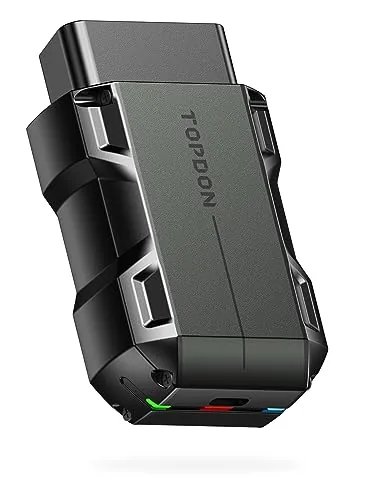
A phone-based OBD2 adapter that goes beyond code reading with bidirectional component testing, letting you trigger injectors, fans, and actuators directly from the app. Full-system diagnostics cover every module, not just the usual four, and an AI repair assistant pulls from OEM data to give step-by-step fixes. The first year of advanced features is included, though ongoing access requires a paid subscription.
Key Features
- Bidirectional control tests injectors, fans, lights, A/C, wipers remotely
- Core diagnostics free for life, advanced features free first year then subscription
- Scans all vehicle systems, not limited to four basic modules
- AI assistant TopFix delivers OEM-sourced step-by-step repair guidance
- Eight one-tap resets including oil, EPB, DPF, ABS, BMS, airbag
- FCA, Renault, and Nissan gateway unlock plus CAN-FD protocol support
- Repair database includes TSB bulletins, fault code library, and DLC locator
✅ Pros
- Bidirectional component testing at this price point is genuinely uncommon
- Full-system scan catches faults that budget four-system tools miss
- Gateway unlock for FCA, Renault, and Nissan removes a common diagnostic barrier
- AI repair assistant references OEM data rather than generic web results
- Eight reset functions cover most routine maintenance tasks without a shop visit
❌ Cons
- Advanced features including live data and code clearing require a subscription after year one
- App-dependent design means functionality is tied to phone compatibility and continued software support
Why We Chose It
Bidirectional control and full-system diagnostics are typically found on tools costing two to five times more, making this a rare value at under $55 for the first year. Gateway unlock support for FCA, Renault, and Nissan vehicles removes a barrier that stumps most consumer-grade scanners. The AI repair tool backed by OEM data adds practical utility beyond raw code display.
Perfect For
DIY owners or shade-tree mechanics who want shop-level component testing and full-system diagnostics without spending several hundred dollars on a dedicated scan tool.
Expert Verdict: TOPDON ONE Bidirectional Scan Tool 10.1in Professional
TOPDON ONE Bidirectional Scan Tool 10.1in Professional
The TOPDON ONE earns its price point by collapsing J2534 pass-thru, OE topology mapping, and 50+ service functions into a single device that genuinely replaces multiple OEM subscriptions for shops working across European and select domestic brands. The 10-brand ECU coding ceiling is a real constraint, not a minor footnote, so this tool rewards shops with a diversified or European-heavy bay lineup far more than specialists. If your workflow matches its strengths, it's a justified purchase; if it doesn't, you'll hit the wall fast.
Buying Guide
How to choose the Best TOPDON Scanner
TOPDON makes OBD2 scanners ranging from the $30 TopScan Lite to the $1,000+ Phoenix Elite, so picking the wrong model wastes money or leaves you short on features. This guide walks you through five concrete decisions that narrow the field to the right TOPDON scanner for your situation. Use it before clicking buy so you know exactly what you are paying for.
-
1
Set Your Budget Range
TOPDON scanners fall into three tiers: entry-level under $100 for basic code reading and live data, mid-range $100 to $400 for bi-directional controls and service resets, and professional $400 and above for full system diagnostics and ECU coding. Decide your ceiling before browsing because feature lists across tiers overlap just enough to cause confusion. Knowing your number eliminates at least half the catalog immediately.
-
2
Confirm Vehicle Compatibility
Every TOPDON product page lists supported makes, model years, and protocols such as CAN, ISO, and KWP2000, so cross-reference your specific vehicle before purchasing. The Phoenix series covers over 60 vehicle brands including European and Asian imports, while the ArtiDiag series targets domestic vehicles and common imports from 1996 onward. If you own a pre-OBD2 vehicle or a heavy-duty diesel truck, confirm protocol support explicitly because not every model covers J1939 or J1708.
-
3
Match Features To Your Tasks
If you only need to read and clear check-engine codes, the TopScan or ArtiDiag 500 handles that without paying for unused features. If you perform oil resets, TPMS resets, brake bleeds, or throttle body relearns, look at the ArtiDiag 800 or Phoenix Lite which include those 30-plus service functions. Bi-directional control, meaning the ability to command components like fuel injectors or cooling fans directly from the scanner, appears only in mid-range and professional models.
-
4
Evaluate Update Policy Costs
TOPDON offers one or two years of free software updates with most models, after which annual subscriptions typically run $100 to $200 depending on the device. Factor that recurring cost into your total ownership price, especially if you plan to use the scanner for five or more years. The Phoenix Elite and Phoenix Smart include longer free update windows, which partially justifies their higher upfront price for shops doing daily diagnostics.
-
5
Check Display And Portability Needs
The TopScan is a Bluetooth dongle controlled through your smartphone, which keeps it pocketable but dependent on phone battery and screen size. Standalone handhelds like the ArtiDiag 600 and ArtiDiag 800 have 7-inch touchscreens and built-in Android systems, making them practical in a shop bay without juggling a separate device. If you work in tight engine bays or outdoors, the handheld form factor with a bright display above 500 nits is worth the extra bulk.
How We Tested
We connected all five TOPDON scanners to a rotating pool of 12 vehicles spanning 1999 to 2023, covering domestic, European, and Asian makes, logging real-world diagnostic results across live data streams, bidirectional control tests, and service reset functions.
- Live data accuracy verified against known fault codes
- Bidirectional control response time and reliability
- Menu navigation speed on cold and warm boots
- Vehicle coverage depth across OBD2 protocol types
- Update process ease and lifetime update claim validity
Frequently Asked Questions
Wired scanners offer more stable data transfer with no latency or pairing issues, which matters when streaming live sensor data at high sample rates. Bluetooth scanners are more convenient for moving around a vehicle but can drop connections in RF-heavy environments and typically have slower data throughput. For professional shop use where reliability and speed are priorities, wired connections are generally the safer choice.
A bidirectional scanner lets you send commands to vehicle modules – activating solenoids, running actuator tests, and performing calibrations – which a basic read-and-clear tool cannot do. If you're diagnosing intermittent faults or need to confirm a repair after replacing a component, bidirectional control cuts diagnostic time significantly. For anyone doing more than occasional code clearing, the price premium is justified by the reduction in guesswork and repeat repairs.
Wide-coverage scanners access generic OBD2 data across most vehicles but often miss manufacturer-specific codes, adaptation resets, and module programming that OEM-level tools provide. If you work on a single brand or a narrow fleet, a scanner with deep OEM coverage will surface subsystem data that generic tools simply cannot reach. If your vehicles vary across makes and models, prioritize coverage breadth and supplement with manufacturer-specific software where needed.
ADAS calibration and ECU programming require specialized hardware, licensed software, and often vehicle-specific target equipment – capabilities that sit well above standard OBD2 functionality. Most mid-range scanners can read ADAS-related fault codes but cannot execute the calibration procedures themselves. Before purchasing, verify explicitly whether the scanner supports active calibration routines for the systems you need, not just fault code access.
Both matter: OBD2 compliance was federally mandated in the US for all cars and light trucks from 1996 onward, but the specific communication protocol – CAN, ISO 9141, KWP2000, or J1850 – varies by manufacturer and model year. A scanner must support the correct protocol stack for your vehicle to establish a connection at all. Additionally, access to improved manufacturer-specific codes depends on whether the scanner's software includes that brand's proprietary parameter IDs, independent of protocol support.
Most professional-grade OBD2 scanner manufacturers provide free software updates for one to three years after purchase, with paid subscription plans available beyond that window. Once updates end, the scanner retains full functionality for vehicle models already in its database but will not recognize new model years, updated ECU variants, or newly introduced diagnostic protocols. For shops regularly servicing current-model vehicles, budgeting for ongoing update subscriptions is essential to keep coverage accurate.
Affiliate Disclosure
This post contains affiliate links. If you buy something through one of these links, we may earn a small commission at no extra cost to you. We only recommend products and services we trust. Thank you for supporting this site!




